

Living in Allentown, Pennsylvania, means dealing with hot summers, sudden thunderstorms, and thick humidity that can wreak havoc on your home’s roofing system. For homeowners here, understanding the right steps for maintaining roof health in humidity is essential to prevent costly damage, extend the life of your roof, and protect your home.
Humidity introduces moisture into the air that can settle in roofing materials, causing mold, algae, rot, and even structural damage over time. This blog will cover six effective tips for maintaining roof health in humidity, particularly tailored to Allentown’s unique weather conditions.
1. Ensure Proper Roof Ventilation
One of the most essential tips for maintaining roof health in humidity is proper ventilation. Roofs in Allentown need to “breathe” to prevent heat and moisture buildup in the attic, which can lead to:
- Mold and mildew
- Warped decking
- Damaged insulation
Make sure your roof has ridge vents, soffit vents, or attic fans to allow airflow. Regularly inspect your attic for signs of excess humidity, especially during July and August when conditions are most intense.
2. Regularly Clean Gutters and Downspouts
Blocked gutters lead to water overflow and standing moisture near roof edges. In humid weather, this can promote rot and moss growth on fascia boards and shingles.
Cleaning gutters is a crucial part of maintaining roof health in humidity. Here’s what to do:
- Clear leaves, twigs, and debris after each storm
- Ensure downspouts channel water away from the home
- Check for signs of rust or leaks
Allentown neighborhoods with large tree coverage like West Park and Union Terrace are especially prone to gutter issues.
3. Trim Overhanging Branches and Trees
Trees can be both a blessing and a threat. During humid months, overhanging branches drop leaves that trap moisture on your roof surface.
For better results in maintaining roof health in humidity:
- Trim branches at least 5 feet from the roof
- Remove fallen debris from roof valleys
- Check for algae or mold growth in shaded areas
Shady roofs are especially vulnerable. Regular trimming helps your roof dry faster after storms or dewy mornings.
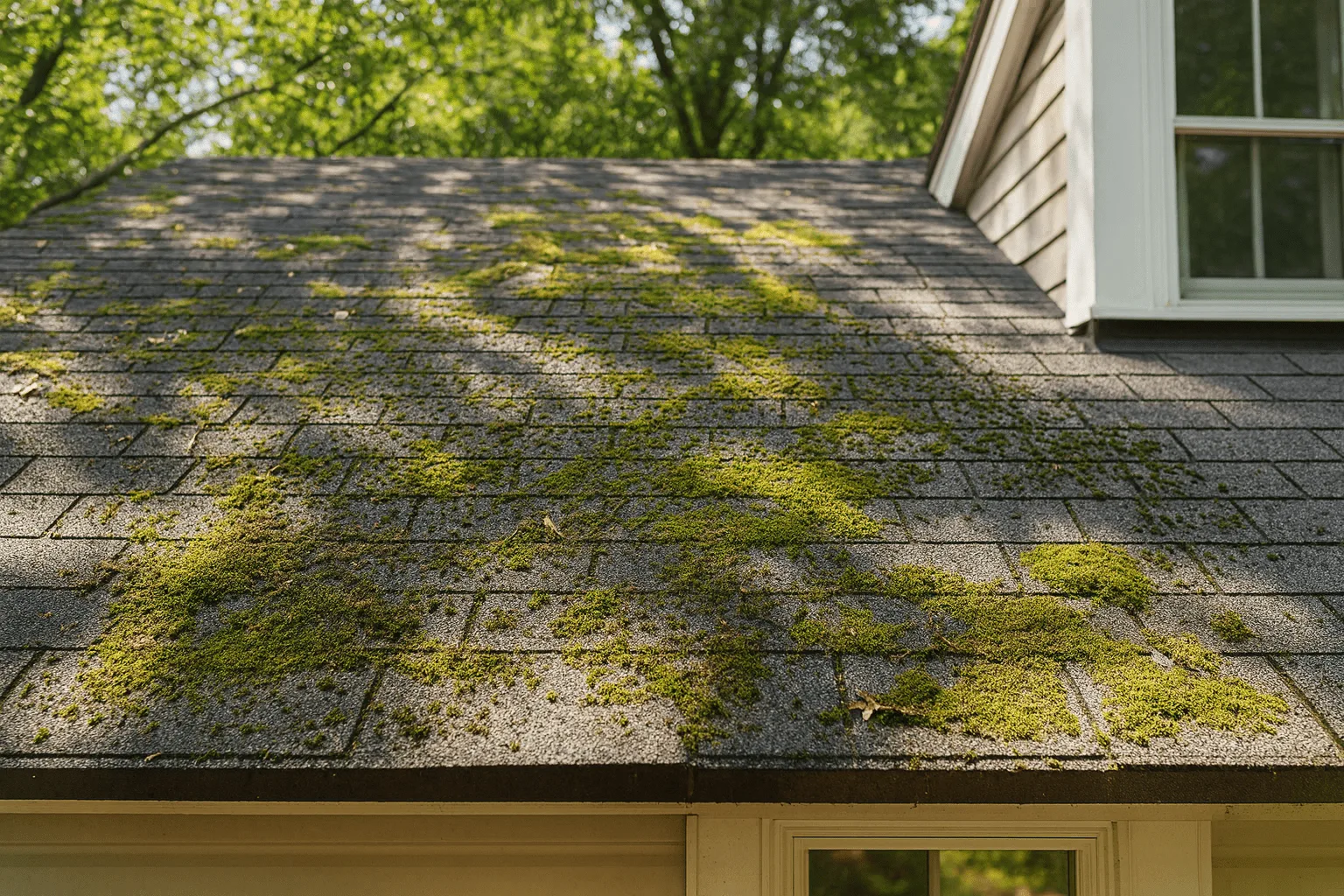
4. Inspect for Algae, Moss, and Mold Growth
Humidity creates the perfect environment for moss and algae. These organisms retain moisture and can damage roofing materials over time. Look for:
- Green streaks or fuzzy patches
- Black stains or discoloration
- Warped or soft shingles beneath growth
Use gentle solutions, never a pressure washer, to clean these spots. A soft brush and mild roof cleaner are great tools for maintaining roof health in humidity. Consider copper or zinc strips for long-term prevention.
5. Schedule Seasonal Roof Inspections
A professional inspection is your best defense against unseen humidity damage. Having your roof checked after summer is key to maintaining roof health in humidity because moisture issues may not be visible from the ground.
An expert will look for:
- Soft decking
- Hidden leaks
- Ventilation issues
- Signs of internal moisture
At In The Light Roofing, we offer expert Roof Inspections for Allentown homes. Our team knows how to identify the damage humidity causes, before it becomes a bigger problem. Visit us in Allentown for a free consultation.
6. Address Minor Issues Before They Grow
Lastly, small problems today can become major repairs tomorrow, especially in humid climates. Cracks in flashing, missing shingles, or mild leaks can allow moisture to enter and fester.
Don’t delay:
- Patch minor leaks quickly
- Replace loose or missing shingles
- Re-seal cracked caulking
This proactive approach is at the heart of maintaining roof health in humidity. Preventive maintenance is always more affordable than emergency repairs.
Why Humidity Is a Real Concern in Allentown
Allentown’s summers are humid and unpredictable. Storms, muggy evenings, and dense air are common from June through September. Combined with shade from historic homes and dense tree cover, moisture can linger longer than in dryer regions.
Understanding maintaining roof health in humidity means acknowledging how local weather impacts roofing systems and acting early to prevent long-term damage.
Frequently Asked Questions
How often should I inspect my roof during humid seasons?
At least twice a year, ideally after summer and before winter.
Can I use bleach to remove moss or algae?
Use specialized roof cleaners, bleach can damage shingles and plants.
Does humidity affect metal roofs too?
Yes. While resistant to rot, they can still develop rust or condensation issues.
What roofing materials handle humidity best?
Metal, clay tiles, and high-quality architectural shingles perform well in moisture-prone areas.
Do I need to clean algae if it’s not leaking?
Yes. Algae can deteriorate shingles over time, even without leaks.