

By Bryson Berard, Founder | In The Light Roofing
Published: Summer 2026
Reading Time: 9 Minutes
Summer is the best time of year to inspect your roof.
If you live in Allentown, Bethlehem, Easton, Macungie, Coplay, or anywhere throughout the Lehigh Valley, your roof has already endured months of freezing temperatures, heavy rain, strong winds, and spring storms. Before fall weather arrives, taking just 20 minutes to inspect your roof could help you catch small problems before they become expensive repairs.
I’ve been serving homeowners throughout the Lehigh Valley since 2017, and almost every fall I hear the same sentence:
“I had no idea anything was wrong until water came through the ceiling.”
The reality is that roof leaks rarely happen overnight. Most begin as small issues that worsen over time through repeated exposure to storms, UV rays, and changing temperatures.
Fortunately, many of these warning signs can be spotted safely from the ground.
You don’t need to climb onto your roof.
You simply need:
- A smartphone with zoom or binoculars
- Around 20 minutes
- This inspection checklist
Why Summer Is the Best Time for a Roof Inspection
By midsummer, your roof has already survived:
- Winter freeze-thaw cycles
- Heavy spring rainfall
- Wind storms
- Hail
- Falling branches
- Pollen and tree debris
Summer also introduces another major threat:
Ultraviolet (UV) exposure.
Dark asphalt shingles can exceed 150°F (65°C) during sunny Pennsylvania afternoons. Over time, that intense heat dries out shingles and accelerates aging.
Inspecting your roof now gives you two major advantages:
1. Time Before Fall Weather
Finding a problem in July allows plenty of time to schedule repairs before autumn storms begin.
Waiting until November often means emergency repairs during bad weather.
2. Insurance Documentation
If severe weather causes damage later in the year, timestamped photos from your summer inspection can provide valuable documentation when filing an insurance claim.
Summer Roof Inspection Checklist
Walk completely around your home while inspecting each roof slope.
Take photographs of anything that appears unusual.
1. Check for Granule Loss
One of the earliest signs of roof aging is granule loss.
Look inside:
- Gutters
- Downspouts
If you notice piles of black or gray sand-like material, your shingles may be losing their protective coating.
A few granules are normal.
Large amounts—especially on roofs older than ten years—deserve professional attention.
2. Look for Curling or Missing Shingles
Stand back and inspect every roof slope.
Watch for:
- Curled edges
- Buckled shingles
- Missing shingles
- Cracked shingles
- Uneven rows
South and west-facing roof slopes typically age faster because they receive the most sunlight.
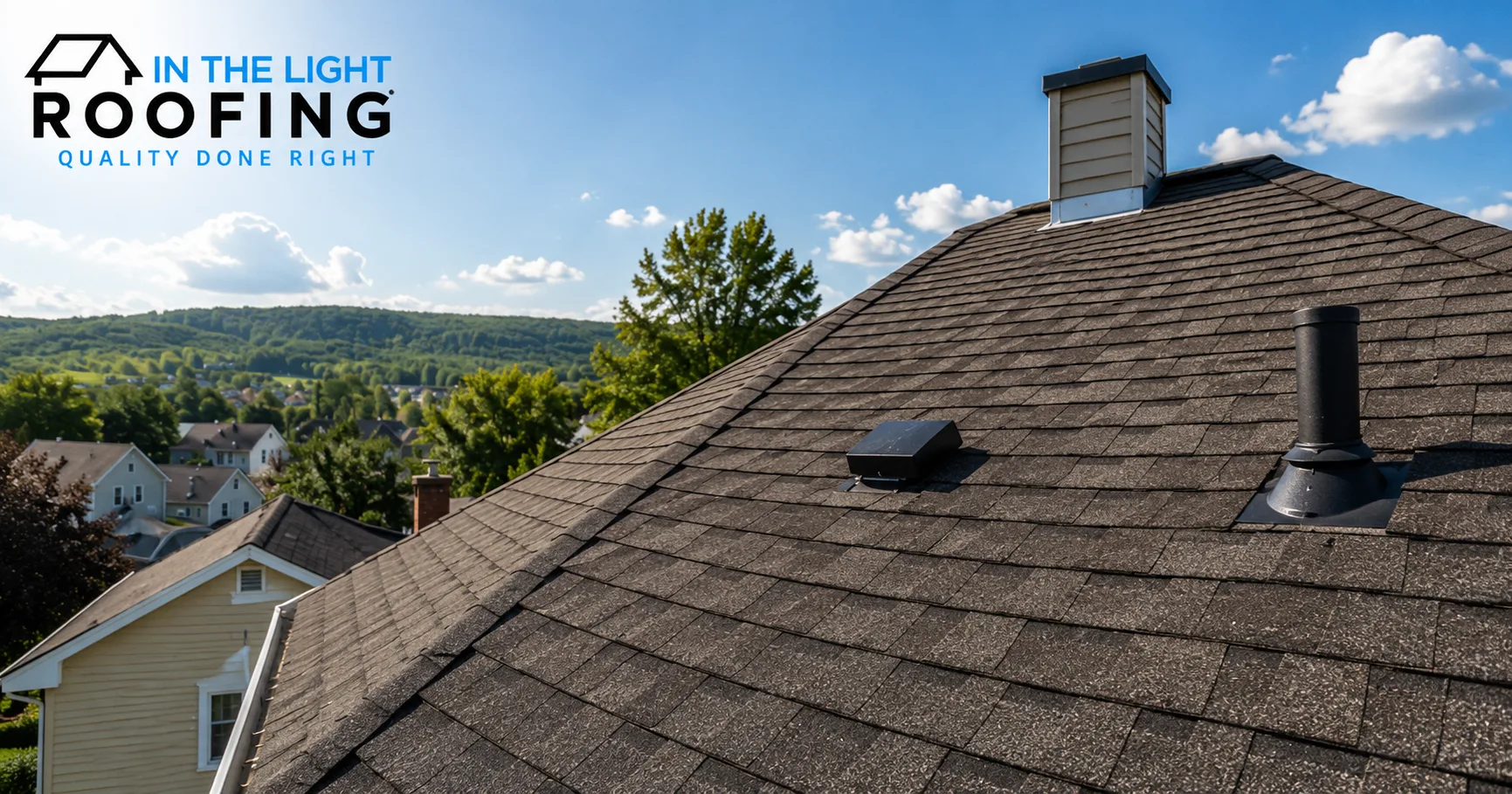
3. Inspect Roof Flashing
Flashing seals areas around:
- Chimneys
- Skylights
- Plumbing vents
- Roof-to-wall transitions
Look for:
- Rust
- Bent metal
- Cracked sealant
- Visible gaps
Flashing failures are among the most common causes of roof leaks.
4. Check the Roofline
Step across the street and examine the roof silhouette.
The roof should appear straight.
Watch for:
- Dips
- Waves
- Sagging
- Uneven ridges
Structural movement usually indicates moisture damage beneath the shingles.
If you notice sagging, contact a roofing professional immediately.
5. Inspect Your Attic
During daylight:
- Turn off attic lights.
- Close the door.
- Look toward the roof decking.
If sunlight shines through—even tiny pinholes—you have openings where water can enter.
Also inspect for:
- Water stains
- Mold
- Damp insulation
- Dark streaks
6. Check Interior Ceilings
Inspect every upstairs room.
Look for:
- Brown stains
- Yellow discoloration
- Peeling paint
- Bubbling drywall
Even old stains may indicate an unresolved roofing issue.
7. Watch for Moss and Algae
Dark streaks are often algae.
While mostly cosmetic, algae trap moisture and increase shingle wear.
Moss is more serious.
It lifts shingles while holding water against the roof surface, increasing the likelihood of leaks.
8. Look for Raised Nails
Using binoculars or your phone zoom:
Look for small raised bumps beneath shingles.
These usually indicate roofing nails backing out over time because of temperature changes.
Eventually, they create leak pathways.
9. Remove Debris
Leaves and sticks often collect in:
- Valleys
- Dormers
- Flat roof sections
- Behind chimneys
Debris traps moisture and blocks water flow, shortening roof life.
10. Inspect Gutters
Your gutters should:
- Be securely attached
- Drain properly
- Be free of standing water
- Have no rust holes
- Have no separated seams
Failing gutters frequently cause roof decking and fascia rot.
What Homeowners Should Never Do
While inspections are encouraged, certain tasks should always be left to professionals.
Avoid:
- Walking on your roof
- Using a pressure washer
- Applying roof sealants without diagnosis
- Hiring unsolicited door-to-door roofing contractors
A safe ground inspection is all most homeowners need.
Call a Roofing Professional Immediately If You Notice
Contact a roofing contractor promptly if you observe:
- Sagging roof sections
- Wet ceiling stains
- Daylight inside your attic
- Missing shingles after wind
- Active roof leaks
- Storm damage within the last month
If your roof is more than 20 years old and several items from this checklist apply, it’s time for a professional assessment.
What Our Free Roof Inspection Includes
At In the Light Roofing, we believe homeowners deserve complete transparency.
Every inspection includes:
Thorough Roof Inspection
We safely inspect every accessible roofing component.
Attic Inspection
We evaluate:
- Ventilation
- Roof decking
- Moisture
- Insulation
High-Resolution Photos
You’ll receive clear photographs documenting every finding.
Written Roof Condition Report
We explain:
- Overall roof health
- Remaining life expectancy
- Recommended repairs
- Areas requiring monitoring
Honest Recommendations
If your roof still has years of life remaining, we’ll tell you.
If repairs are needed, you’ll receive a straightforward estimate.
If storm damage may qualify for insurance coverage, we’ll guide you through the claims process.
Frequently Asked Questions
How often should I inspect my roof?
Twice each year:
- Spring
- Late summer
Also inspect after major storms involving hail or strong winds.
How long does a roof inspection take?
Most inspections take 30–45 minutes, including the attic.
Will homeowners insurance cover roof damage?
Insurance generally covers sudden damage caused by:
- Wind
- Hail
- Falling trees
- Fire
It does not cover normal aging or lack of maintenance.
How long does an asphalt roof last in Pennsylvania?
A professionally installed architectural asphalt roof generally lasts:
20–30 years
Actual lifespan depends on:
- Ventilation
- Sun exposure
- Installation quality
- Maintenance
Do roof leaks always require replacement?
No.
Many leaks originate from:
- Flashing
- Individual shingles
- Popped nails
- Pipe boots
Most can be repaired without replacing the entire roof.
Schedule Your Free Roof Inspection
If anything in this checklist concerns you, we’re here to help.
Our inspections are:
- Free
- No obligation
- Fully documented
- Completed by experienced local professionals
📞 Call: (484) 553-0213