

Cold winter mornings in Philadelphia often bring an unexpected problem homeowners do not notice until damage is already underway. Attic condensation in Philadelphia becomes more common when cold air meets indoor moisture, creating frost, damp insulation, and hidden roof issues.
At In The Light Roofing, we regularly inspect homes where homeowners feel drafts, notice musty smells, or discover water stains without seeing an active roof leak. In many cases, the root cause is attic condensation in Philadelphia, not exterior water intrusion. Understanding why this happens in winter and how home science explains it can help protect your roof, attic, and indoor air quality.
Cold Air + Humidity = Condensation
Philadelphia winters are unique. Outdoor temperatures drop quickly, while indoor heating systems raise interior warmth. According to NOAA regional climate data, winter humidity levels inside homes often remain higher than outdoor air, even when temperatures fall below freezing.
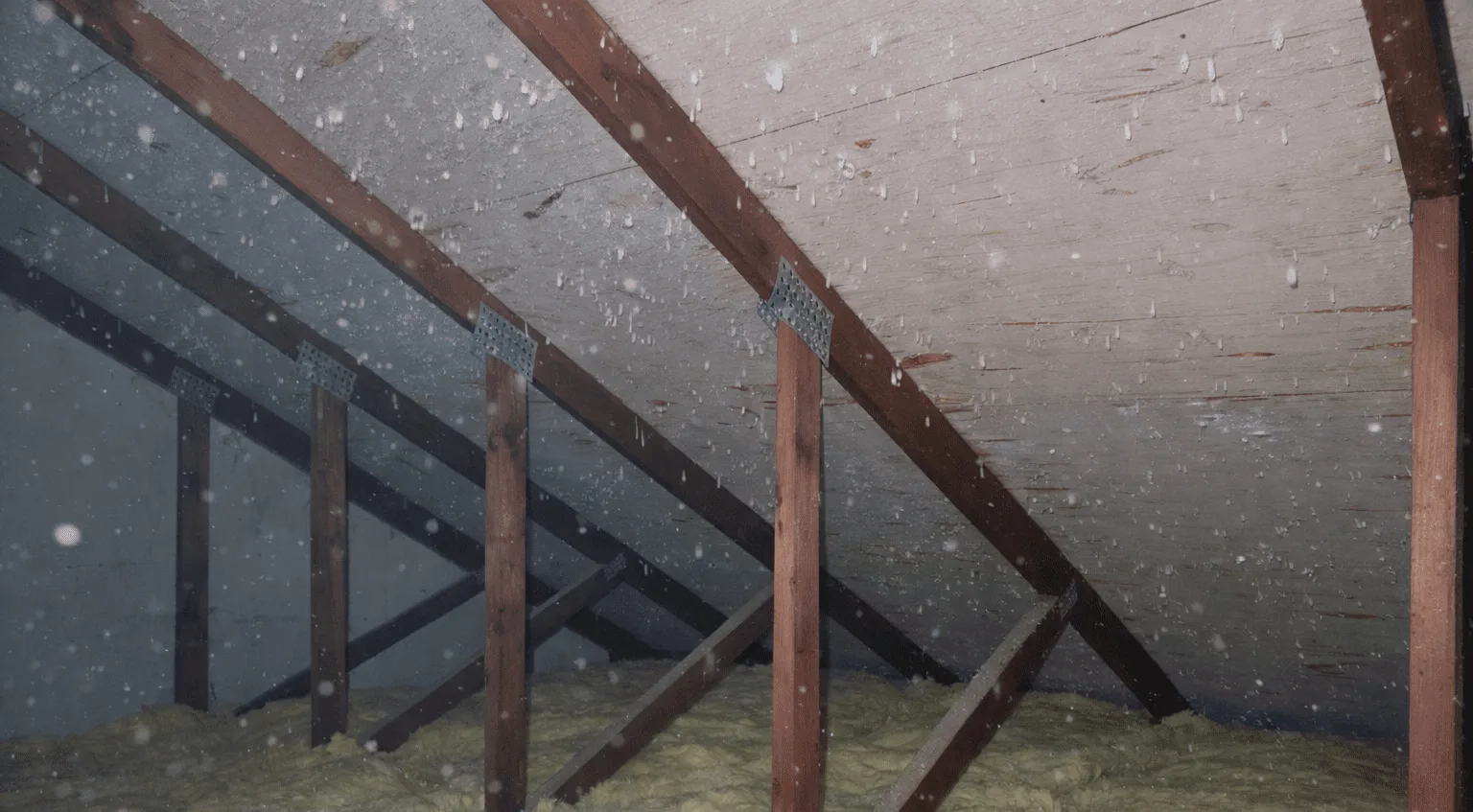
This imbalance creates the perfect conditions for attic condensation in Philadelphia. Warm, moist air rises into the attic. When it hits cold roof decking or nails, moisture condenses and freezes. Over time, that frost melts, soaking insulation and wood components.
What Is Attic Condensation
Attic condensation in Philadelphia occurs when airborne moisture changes into liquid water inside the attic. Unlike roof leaks, condensation does not require damaged shingles. It is a physics problem driven by temperature differences and airflow.
When moisture builds up, it can lead to:
- Wet or compacted insulation
- Frost on rafters or nails
- Mold growth
- Wood rot
- Reduced energy efficiency
Because the process is slow and hidden, homeowners often miss early warning signs.
Why Philadelphia Homes Are Especially Vulnerable
Many Philadelphia-area homes were built decades ago, before modern ventilation standards were common. Older attics often lack balanced airflow or proper vapor barriers.
Licensed roofers frequently find that attic condensation in Philadelphia is worsened by:
- Blocked soffit vents
- Insufficient ridge ventilation
- Bathroom fans venting into the attic
- Gaps around attic access hatches
- Uneven insulation coverage
These issues allow warm indoor air to escape upward, carrying moisture with it.
The Science Behind Winter Condensation
Home science explains condensation simply. Warm air holds more moisture than cold air. When that warm air rises and cools rapidly, it releases moisture.
In winter, attic condensation in Philadelphia increases because:
- Indoor heating raises air temperature
- Cold roof surfaces drop below the dew point
- Moisture condenses on cold materials
This cycle repeats daily during winter cold snaps, slowly saturating attic materials.
A Real Homeowner Scenario
A homeowner in Northeast Philadelphia contacted In The Light Roofing after noticing a persistent musty odor upstairs. There were no roof leaks and no visible damage from outside.
During inspection, we found heavy frost buildup on attic nails and damp insulation beneath. The cause was poor ventilation and bathroom exhaust fans releasing humid air into the attic. Attic condensation in Philadelphia had been occurring for months without visible signs indoors.
Once ventilation was corrected and moisture sources redirected, the attic dried naturally, preventing further damage.
Signs Homeowners Should Watch For
Early signs of attic condensation in Philadelphia are often subtle. Watch for:
- Frost or moisture on attic framing
- Damp insulation
- Musty odors indoors
- Peeling paint near ceilings
- Rust on attic nails
If you notice these signs, professional evaluation is recommended before mold or rot develops.
Ventilation vs Insulation: Why Both Matter
Insulation slows heat transfer, while ventilation removes moist air. Both are necessary to control attic condensation in Philadelphia.
Without ventilation, insulation traps warm air. Without insulation, heat escapes too quickly. The balance keeps attic temperatures close to outdoor conditions while limiting moisture buildup.
Roofers often say ventilation is the release valve that keeps attics healthy during winter.
Why Roof Decking Suffers First
Roof decking is one of the coldest surfaces in winter. When condensation forms repeatedly, wood absorbs moisture and weakens over time.
This hidden damage is a major reason attic condensation in Philadelphia is taken seriously by experienced roofing professionals. By the time decking issues become visible from outside, repairs are more extensive.
The Role of Bathroom and Kitchen Venting
Bathrooms and kitchens generate large amounts of moisture. If exhaust fans do not vent outdoors, moisture is released directly into the attic.
During inspections, we frequently find that attic condensation in Philadelphia is driven by improper venting. Correcting fan ducting alone can dramatically reduce moisture levels.
Local Weather Patterns Make It Worse
Philadelphia experiences frequent winter temperature swings. These shifts create repeated freeze-thaw cycles in attics.
Each cycle increases the risk of attic condensation in Philadelphia, especially during long cold stretches followed by brief warm periods.
Why Attic Condensation Is Often Misdiagnosed
Many homeowners assume ceiling stains are roof leaks. While leaks do happen, condensation is often the real cause.
Professional roofers use moisture meters, visual inspection, and airflow analysis to identify attic condensation in Philadelphia accurately. This prevents unnecessary exterior repairs and focuses on the true issue.
The Importance of Professional Inspections
A proper inspection looks beyond shingles. At In The Light Roofing, our attic evaluations include ventilation layout, insulation depth, moisture detection, and airflow assessment.
Scheduling regular Roof Inspections helps identify condensation before it causes structural damage. This approach focuses on prevention and education, not assumptions.
Simple Steps Homeowners Can Take
To reduce the risk of attic condensation in Philadelphia, homeowners should:
- Ensure bathroom fans vent outdoors
- Seal attic access points
- Maintain even insulation coverage
- Keep soffit vents clear
- Schedule professional attic evaluations
These steps work together to control moisture movement.
Why Homeowners Trust In The Light Roofing
Local experience matters when dealing with winter attic issues. In The Light Roofing understands regional construction styles, ventilation challenges, and winter weather patterns across eastern Pennsylvania.
Our licensed professionals explain problems clearly and offer practical solutions. You are also welcome to visit us in Allentown, PA to discuss attic and roof concerns in person.
Final Thoughts: Protecting Your Home From the Inside Out
Attic condensation in Philadelphia is a winter problem rooted in science, not bad luck. Understanding how moisture, temperature, and airflow interact helps homeowners take control before damage occurs.
At In The Light Roofing, we focus on education, prevention, and long-term solutions. Our inspections are designed to protect your roof, attic, and home comfort through every season.
Protect your attic and roof this winter, schedule an inspection.
Frequently Asked Questions
What causes attic condensation in winter
Warm indoor air rises and meets cold attic surfaces, releasing moisture through condensation.
Is attic condensation the same as a roof leak
No. Attic condensation in Philadelphia occurs without exterior water entering the home.
Can condensation damage insulation
Yes. Wet insulation loses effectiveness and can promote mold growth.
Does every home experience attic condensation
No. Homes with proper ventilation and insulation balance experience far fewer issues.
How often should attics be inspected
At least once per year, especially before or during winter.