

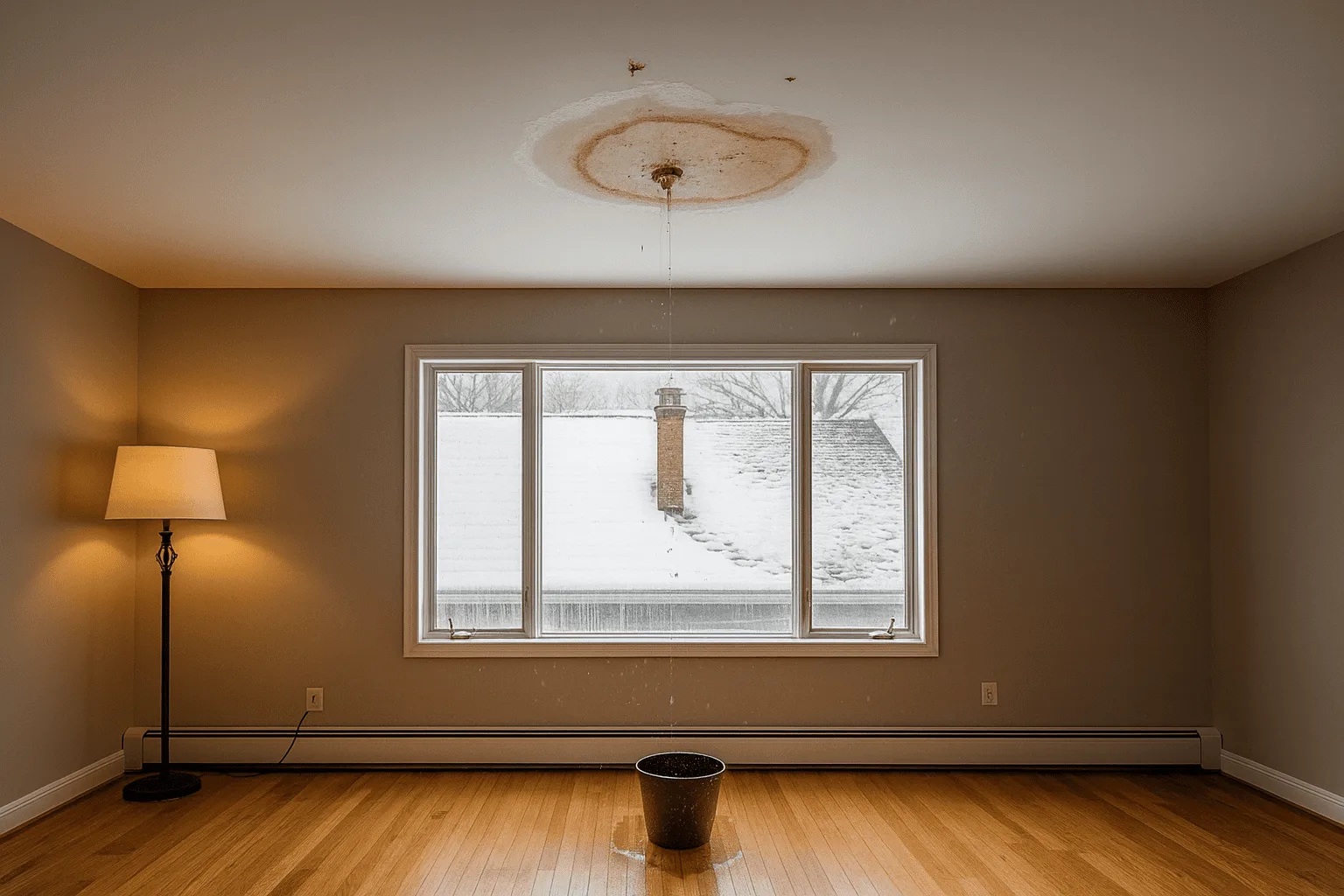
The first freeze of winter can catch Allentown homeowners off guard. One night the air is crisp and dry, the next your ceiling shows a spreading water stain. If you’ve discovered a winter roof leak in Allentown, you’re not alone. Each year, dozens of local homeowners face the same sudden drip after the season’s first deep freeze.
At In The Light Roofing, we’ve seen how winter’s unpredictable weather exposes hidden roof weaknesses, from hairline cracks under shingles to aging flashing around chimneys. Understanding what causes a winter roof leak in Allentown and knowing the right steps to take can save your home from costly repairs later in the season.
Why Winter Roof Leaks Happen in Allentown
When cold air moves into the Lehigh Valley, roofs undergo stress that no other season can replicate. The first freeze-thaw cycle of the year causes expansion and contraction that widens tiny gaps in shingles or flashing. Once snow and ice arrive, melted water seeps in, only to refreeze at night and expand further.
A winter roof leak in Allentown often starts silently. Water can travel several feet from the actual entry point before appearing as a ceiling stain or damp attic insulation. That’s why early detection is key.
Common causes include:
- Ice dams forming along eaves and gutters
- Cracked or brittle shingles from temperature stress
- Loose flashing around skylights or chimneys
- Blocked roof vents or clogged gutters
- Poor attic insulation or ventilation
Local roofer and GAF-certified installer Mark H. notes:
“In Allentown, it’s not unusual for a small attic drip to turn into a major ceiling leak overnight once temperatures drop below 25°F. Ice expansion magnifies every weak spot.”
The First Freeze of Winter Causes Hidden Leaks
By mid-November, the Lehigh Valley typically sees its first hard freeze. According to NOAA data, Allentown’s average low dips below freezing as early as November 12. This is the critical period when existing roof vulnerabilities begin to show.
After that first freeze, melting snow during daytime hours trickles into cracks. When night temperatures return to the 20s, trapped water re-freezes and expands, forcing open gaps that lead to a full winter roof leak in Allentown.
This cycle repeats for months, turning what began as a minor seep into significant interior damage by February. That’s why proactive inspections before the first freeze are essential.
How to Identify a Winter Roof Leak in Allentown
Recognizing the signs early can prevent thousands in damage. During winter, homeowners should regularly check for these warning signals:
- Water spots or brown stains on ceilings or walls
- Damp attic insulation or musty odors
- Ice buildup at the roof’s edge
- Dripping sounds during daytime thaws
- Peeling paint or bubbling plaster near the ceiling
Even subtle signs of moisture can indicate a developing winter roof leak in Allentown. Many homeowners mistake early drips for minor condensation, only to discover hidden rot or mold later.
If you suspect an issue, a professional inspection can pinpoint the exact source, often in areas you can’t safely access yourself.
What to Do Immediately When You Notice a Leak
If you notice signs of a winter roof leak in Allentown, take these steps right away:
- Contain the water. Place a bucket or towels under active drips to prevent floor damage.
- Relieve pressure. If a ceiling bulge appears, gently puncture it to allow trapped water to drain safely.
- Check the attic. Look for damp insulation, frost accumulation, or visible light through roof boards.
- Document everything. Take photos of affected areas; inspection reports help document damage for future reference.
- Call professionals immediately. Contact a trusted roofing contractor like In The Light Roofing for an emergency evaluation.
Delaying repairs until spring allows water to spread through insulation and framing, causing long-term structural issues.
Local Conditions That Make Allentown Roofs Vulnerable
Allentown’s location in the Lehigh Valley means homeowners experience a mix of snow, sleet, and rain from November through March. Frequent temperature swings, sometimes 40°F in a single day, create extreme pressure on roofing materials.
Hail and freezing rain, both common in the region, often go unnoticed until the damage appears months later. Allentown’s winter mix can turn minor roof wear into active leaks after one storm.
Local roofing crews understand this unique challenge. That’s why In The Light Roofing trains technicians specifically for Pennsylvania’s freeze-thaw weather cycles, using flexible adhesives and cold-weather sealants designed to withstand the strain.
The Role of Attic Insulation and Ventilation
A poorly insulated attic contributes to ice dams, one of the top culprits behind a winter roof leak in Allentown. When warm air rises from living spaces, it melts the bottom layer of snow on the roof. The water flows toward the colder edges, refreezing into ice dams that trap additional moisture.
Our team often finds that improving attic insulation and ventilation can stop recurring leaks. Proper airflow keeps roof temperatures consistent, reducing melting and refreezing cycles. During inspections, we use thermal imaging to identify heat loss patterns that signal insulation gaps.
Temporary Fixes vs. Permanent Solutions
When dealing with a winter roof leak in Allentown, temporary patches can help prevent immediate water intrusion, but they’re not a long-term fix.
Temporary Measures:
- Applying roof-safe tarps
- Using cold-weather sealant for small gaps
- Clearing gutters and downspouts
Permanent Repairs:
- Replacing damaged shingles or flashing
- Installing ice-and-water shields
- Upgrading ventilation and insulation
Our Roof Repairs service handles both emergency stabilization and long-term solutions. Every repair starts with a detailed assessment to ensure the leak’s root cause, not just its symptom, is addressed.
A Local Homeowner Story: The Cedar Crest Leak
In January 2024, an Allentown homeowner named Claire noticed a faint yellow stain near her bedroom light fixture. Thinking it was minor condensation, she waited a few days. When the next snowstorm hit, the stain turned into a steady drip.
Our team found the culprit: ice buildup in her roof valley had forced meltwater under aged shingles. Within hours, our technicians cleared the ice, sealed the flashing, and replaced affected shingles.
Two days later, Claire said, “I couldn’t believe how fast it went from small stain to full leak. I’m grateful you came before it ruined the ceiling.”
Her story is typical, and why early action matters for anyone facing a winter roof leak in Allentown.
How Professional Roofers Diagnose a Winter Leak
Unlike summer leaks, winter leaks are often hidden beneath layers of snow and ice. In The Light Roofing uses specialized methods to locate and confirm leaks safely:
- Thermal Imaging Cameras detect heat loss through wet insulation.
- Moisture Meters pinpoint water presence behind drywall.
- Drone Assessments capture aerial images when roof access is unsafe.
- Infrared Scans reveal cold zones that align with leak paths.
Once located, we isolate the area, make temporary weatherproof repairs, and schedule permanent restoration once conditions stabilize.
The Dangers of Ignoring a Winter Roof Leak
Homeowners sometimes assume they can “wait it out” until spring. Unfortunately, delaying repairs allows moisture to seep into structural components, creating rot, mold, and even electrical hazards.
A neglected winter roof leak in Allentown can cause:
- Insulation saturation and loss of R-value
- Ceiling or drywall collapse
- Mold growth in attic or wall cavities
- Damage to electrical wiring or fixtures
When we receive emergency calls in late February, most major damage stems from leaks that began as minor drips two months earlier.
What Makes In The Light Roofing the Trusted Local Choice
We’re more than a roofing company, we’re your neighbors. In The Light Roofing has helped protect homes across the Lehigh Valley for years, including Allentown, Bethlehem, Walnutport, and Slatington.
Our GAF-certified team specializes in winter diagnostics and emergency repair services. We combine hands-on experience with advanced technology to ensure accurate results even in freezing temperatures.
Homeowners trust us for our honesty and craftsmanship, whether it’s a simple patch or a full winter leak restoration. You can also Visit us in Allentown, PA to discuss your roofing needs before the next snowstorm hits.
Preventing Future Winter Roof Leaks
Once repairs are complete, prevention becomes key. Follow these expert tips to reduce future leak risks:
- Schedule regular inspections each spring and fall.
- Clean gutters before winter to prevent ice dams.
- Trim overhanging branches that can deposit snow or debris.
- Upgrade attic insulation for better temperature control.
- Install a water shield membrane in vulnerable valleys and eaves.
A little preparation before each season can drastically reduce the chance of another winter roof leak in Allentown next year.
Final Thoughts: Act Quickly, Protect Your Home
A winter roof leak in Allentown isn’t just an inconvenience, it’s a warning sign. Ignoring it risks structural damage, energy loss, and costly repairs. But with early detection, prompt action, and trusted professionals, most winter leaks can be fixed before they spread.
At In The Light Roofing, our certified experts are ready to inspect, repair, and protect your home through every season. We combine local knowledge with modern diagnostics to ensure long-lasting results, no matter how unpredictable the Lehigh Valley winter becomes.
Don’t wait for a thaw, schedule a leak inspection today.
Frequently Asked Questions
Why do roof leaks start in winter?
Cold weather causes materials to expand and contract, opening gaps. Ice dams then trap meltwater, forcing it beneath shingles and leading to leaks.
Can I repair a roof leak myself in winter?
Small patches can help temporarily, but professional repairs ensure safety and long-term protection, especially during freezing conditions.
How soon should I call a roofer after spotting a leak?
Immediately. Even slow drips indicate water intrusion that worsens quickly in Allentown’s cold weather.
Will snow prevent repairs from being made?
Not always. Roofing crews can safely remove snow and perform targeted repairs using winter-safe materials.
Can inspections document damage for insurance purposes?
Yes, inspection reports help document damage, but we do not make insurance claim guarantees.