

When winter settles into the Lehigh Valley, homeowners brace for snow, ice, and freezing nights. But one of the most damaging winter roof problems often starts quietly along the roof edge. Ice dams in Allentown are a common issue during deep freeze patterns, and they can cause serious damage if left unchecked.
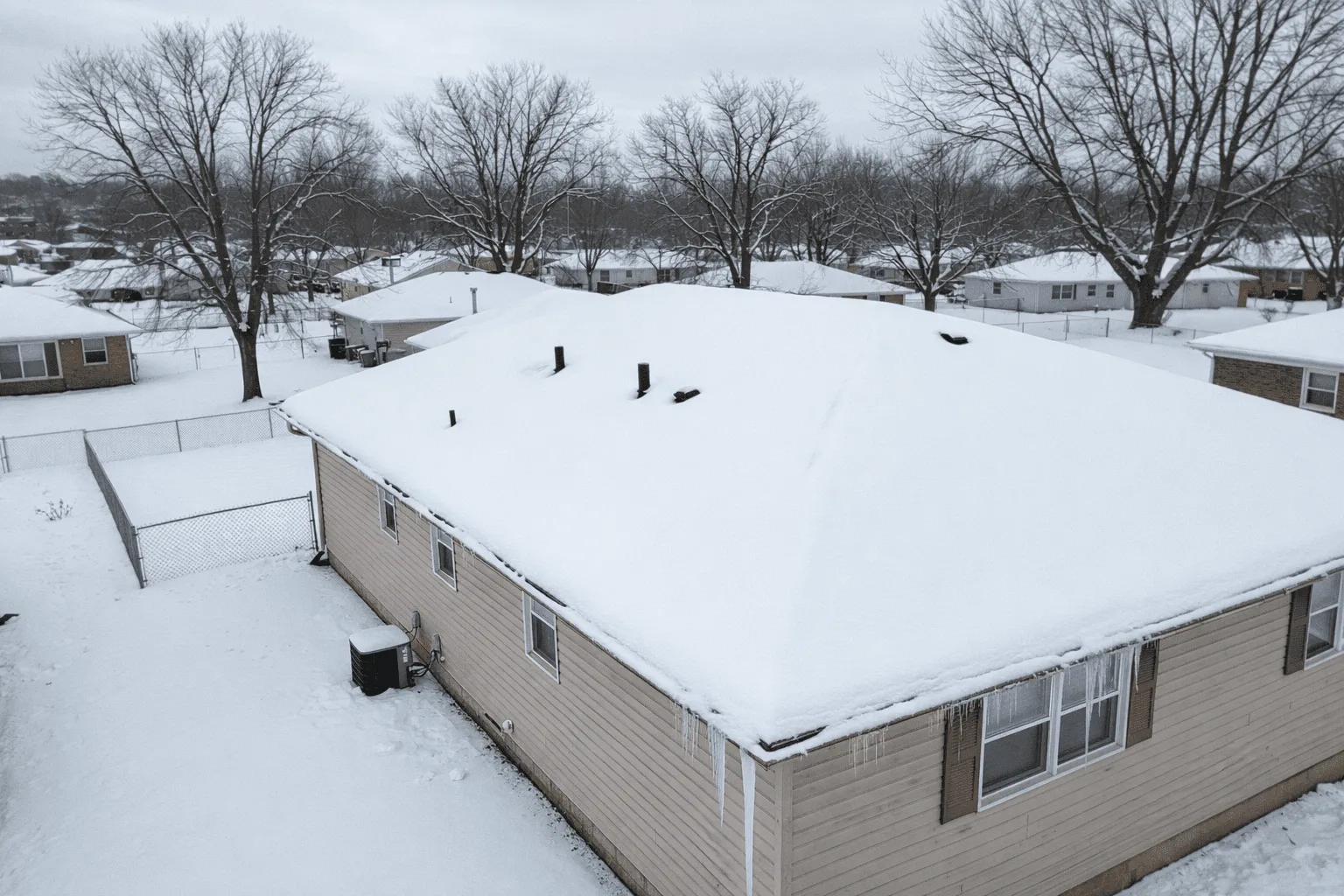
At In The Light Roofing, we see this every winter. A homeowner notices long icicles hanging from the eaves. It looks harmless, even picturesque. But behind those icicles, water may be backing up under shingles, soaking insulation, and damaging roof decking. Understanding why ice dams in Allentown form and how attic ventilation plays a key role in prevention can help protect your home all winter long.
Deep Freeze Patterns Create Ice Dams
Allentown winters are known for temperature swings. One day hovers just above freezing, the next drops into the teens overnight. According to NOAA regional climate data, eastern Pennsylvania frequently experiences freeze-thaw cycles after snowstorms. These patterns are the perfect setup for ice dams in Allentown.
Snow melts during the day, flows toward the colder roof edges, then refreezes at night. Over time, this creates a solid ridge of ice that blocks drainage. Water has nowhere to go except backward, under shingles and into your home.
What Are Ice Dams and Why They’re Dangerous
Ice dams in Allentown occur when snow melts unevenly across a roof. The upper roof surface warms, while the eaves remain cold. As melted snow refreezes at the edge, it forms a dam. Behind that dam, water pools and slowly seeps into vulnerable areas.
The danger isn’t just visible leaks. Ice dams can cause:
- Saturated attic insulation
- Mold growth from trapped moisture
- Rotting roof decking
- Peeling paint and stained ceilings
- Warped fascia and damaged gutters
These issues often remain hidden until spring, when repairs become far more extensive.
Why Attic Ventilation Is the Real Culprit
Many homeowners assume ice dams are caused by bad shingles or poor roof materials. In reality, attic conditions are often the root cause. Poor ventilation allows warm air from living spaces to rise into the attic. That heat warms the roof surface, triggering snowmelt even when outdoor temperatures remain below freezing.
Licensed roofers consistently point to ventilation problems when addressing ice dams in Allentown. Balanced airflow keeps attic temperatures closer to outdoor temperatures, reducing uneven melting. Without it, ice dams are almost inevitable during prolonged cold spells.
The Role of Insulation vs Ventilation
Insulation and ventilation work together, but they serve different purposes. Insulation slows heat transfer from your home into the attic. Ventilation removes warm, moist air that does get through.
When insulation is uneven or compressed, heat escapes in pockets. When ventilation is blocked or undersized, that heat stays trapped. This combination is a leading cause of ice dams in Allentown, especially in older homes with outdated attic designs.
A Local Homeowner Story
Last winter, a homeowner near West Tilghman Street called us after noticing water stains along an upstairs wall. Outside, thick icicles lined the roof edge. During inspection, we found heavy ice dams in Allentown conditions along the eaves and soaked insulation in the attic.
The shingles themselves were intact. The real issue was blocked soffit vents and insufficient ridge ventilation. We cleared the ice safely, documented the damage, and corrected the airflow. The following winter, despite similar snowfall, ice dams did not return. This is a clear example of why prevention matters more than surface-level fixes.
How Ventilation Prevents Ice Dams
Proper ventilation creates a consistent temperature across the roof deck. Cold air enters through soffit vents and exits through ridge or roof vents. This airflow prevents warm spots that cause snow to melt unevenly.
Homes with proper ventilation see fewer ice dams in Allentown, even during long cold snaps. Ventilation also helps reduce attic moisture, which protects insulation and framing from long-term damage.
Warning Signs You May Have Ice Dams
Homeowners should watch for early indicators of ice dams in Allentown, including:
- Large icicles forming along gutters
- Water dripping behind exterior siding
- Frost buildup inside the attic
- Ceiling stains after snowstorms
- Gutters pulling away from the fascia
Catching these signs early allows for safer intervention before damage spreads.
Why Temporary Fixes Don’t Solve the Problem
Many homeowners attempt quick solutions like chipping ice, installing heat cables, or salting roof edges. While these may relieve symptoms, they don’t address the root cause.
Without correcting attic ventilation and insulation issues, ice dams in Allentown are likely to return after the next storm. Professional evaluation ensures the solution targets airflow, not just visible ice.
Professional Roof and Attic Evaluation
At In The Light Roofing, our winter assessments focus on prevention and documentation. We inspect attic airflow, insulation coverage, vent placement, and roof edge conditions.
When damage is present, we provide detailed photos and reports. As a compliance-safe note, documentation helps homeowners understand roof conditions and plan next steps responsibly. Our team also handles necessary Roof Repairs caused by ice-related water intrusion.
Local Weather Knowledge Matters
Allentown sits in a weather corridor that sees frequent winter variability. Allentown’s freeze-thaw cycles demand localized solutions.
Roofing strategies that work in consistently cold climates may fail here. That’s why ice dams in Allentown require a ventilation-focused approach tailored to regional conditions, not generic fixes.
Steps Homeowners Can Take Right Now
To reduce the risk of ice dams in Allentown, homeowners should:
- Keep attic insulation evenly distributed
- Ensure soffit and ridge vents are unobstructed
- Remove snow buildup near roof edges using a roof rake
- Seal air leaks around attic access points
- Schedule a professional ventilation inspection
These steps work together to maintain roof temperature balance during winter.
Why Homeowners Trust In The Light Roofing
Local experience matters when dealing with winter roofing issues. In The Light Roofing has spent years addressing ice dams in Allentown and surrounding areas. Our licensed professionals understand how local weather, home design, and attic conditions interact.
Homeowners appreciate our education-first approach. We explain why problems happen and how to prevent them, not just how to patch visible damage. You can also visit us in Allentown, PA to discuss attic ventilation solutions in person.
Final Thoughts: Prevention Starts in the Attic
Ice dams in Allentown are not just a roof-edge problem. They are a whole-home issue tied closely to attic airflow and insulation balance. Addressing these factors early can prevent winter water damage, protect structural components, and extend the life of your roof.
At In The Light Roofing, we help homeowners move from reaction to prevention with clear guidance and proven solutions. Prevent attic damage, book an ice-dam inspection today.
Frequently Asked Questions
What causes ice dams in Allentown homes?
Uneven roof temperatures caused by poor attic ventilation and insulation allow snow to melt and refreeze at roof edges.
Are icicles always a sign of ice dams?
Large or persistent icicles often indicate ice dams in Allentown, especially when paired with attic moisture or interior leaks.
Can ice dams damage insulation?
Yes. Water trapped behind ice dams can soak insulation, reducing its effectiveness and promoting mold growth.
Do newer homes get ice dams?
Yes. Even newer homes can develop ice dams if ventilation or insulation was installed incorrectly.
How can inspections help homeowners?
Inspections focus on prevention and documentation, helping homeowners understand roof conditions and plan maintenance responsibly.