

The best time for a winter roof inspection is late fall, before the first snow, while the roof is still dry and safe to work on. Then book a second look in early spring, once the snow and ice are gone, to find what the winter did. In between, check the roof from the ground after any big storm.
What a Lehigh Valley winter does to a roof
Our winters do their damage through repetition more than through one big storm. Temperatures cross the freezing point again and again, and every cycle expands and contracts the materials overhead. Water that finds a gap in December is ice by January and water again in February, and each time the gap gets a little wider. Over a season that lifts nail heads, pulls flashing away at chimneys and valleys, and cracks the sealant around vent pipes.
Ice dams are the other winter problem. Heat from the house warms the attic, the snow on the roof melts, and the water freezes again when it reaches the cold edge of the roof. That ridge of ice holds back the next melt, and the water backs up under the shingles. Clogged gutters make it worse. The fix usually starts in the attic, and so does our guide to ice dam prevention.
Heavy snow adds weight as well. If a big snowfall worries you, read our post on roof snow load in the Lehigh Valley.
The fall check, before the snow
A fall inspection gets the roof ready while repairs are still easy to fit in before the weather turns. We look at the shingles for anything the summer storms loosened or cracked, at the flashing around chimneys, vents and skylights, and at the valleys and gutters, where falling leaves collect. A pile of leaves in a valley can freeze and send meltwater sideways under the shingles.
In the attic we check the insulation and the ventilation, because that’s where ice dams start. The photos we take also give you a record of the roof’s condition going into the winter.
Before the leaves are all down, clear the gutters and downspouts, and have any branches that hang over the roof cut back.
The spring check, after the thaw
By March, when the driveway is finally clear, winter’s damage is usually invisible from the ground. A spring inspection looks for the openings a season of ice worked wider: lifted nail heads, flashing that has pulled away at a chimney or valley, cracked sealant around a vent pipe, ridge caps loosened by wind, and granules washed into the gutters.
Winter damage often shows up in the attic first. Insulation shifts over a winter and soffit vents get blocked, and the attic that fed ice along the eaves in January is the same one that bakes the shingles in July. A ceiling stain from February that has stopped spreading still needs a look. It tends to come back with the next long rain.
Book it once the last hard freeze has passed and the roof is clear of snow and ice, ahead of the first heavy thunderstorms. Timing is the whole argument for spring. Damage found in April is usually a repair. The same damage found in August, after months of rain running through it, is often a much bigger job.
Why the weak spots differ from house to house
The shape of the roof decides where winter damage hides. On the older twins and rowhomes in boroughs like Catasauqua, Coplay and Northampton, with a steep front slope and a shallower addition at the back, look at the joins: where the main roof meets the addition, the short valley that funnels half the roof into one downspout, and the gutter line between two houses.
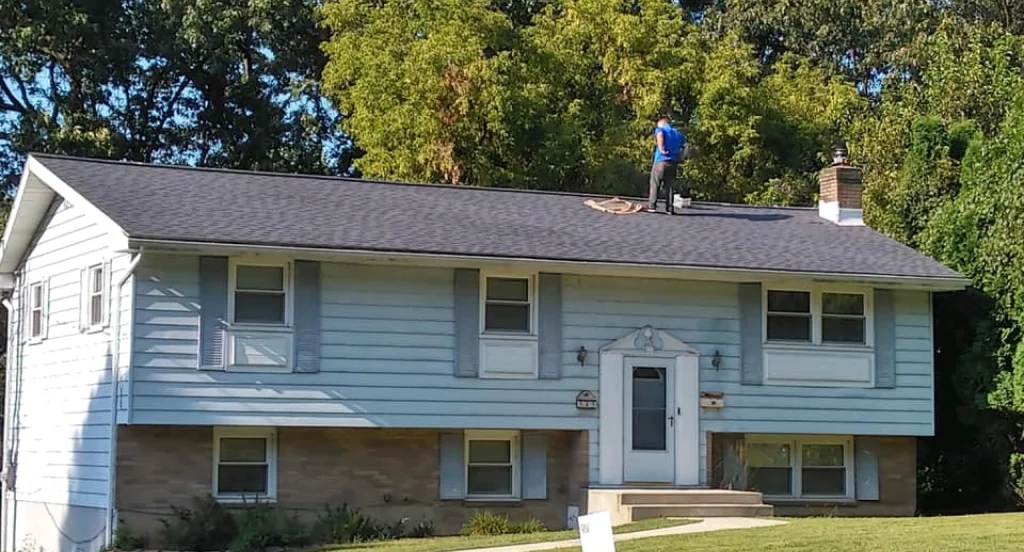
Ranches and split-levels have low slopes that shed water slowly, so a gap a steep roof would shrug off becomes a place where water stands until it finds a way in. The weak spots are where a lower roof runs into a taller wall and wherever a vent or bathroom fan goes through the deck. Newer houses toward Center Valley and Macungie look the safest, but a complicated roofline means more valleys, more dormer walls and more feet of flashing, and flashing is what freeze and thaw works loose.
Up toward Slatington and Walnutport, long north-facing slopes hold snow for days after the sunny side has dried, and the ridge caps and rake edges take the worst of it.
After a winter storm
Between inspections, check from the ground after any storm with high wind, ice or heavy snow. Look for missing or lifted shingles, flashing that has moved, and gutters pulled loose by ice. Inside, check the upstairs ceilings and, if you can get up there safely, the attic. Stay off an icy roof. Our storm damage checklist has the full list of what to look for.
If a storm did damage the roof, we document it with photos and a written report you can share with your insurer. Whether it’s covered is your insurer’s decision, and we don’t file or negotiate the claim for you.
Booking a fall or spring inspection
Every roof inspection we do, whatever the season, covers the roof, the attic and the rooms below, and ends with a written report. Our guide to the roof inspection process goes through each step. To book yours, call (484) 553-0213 or send us a message.