

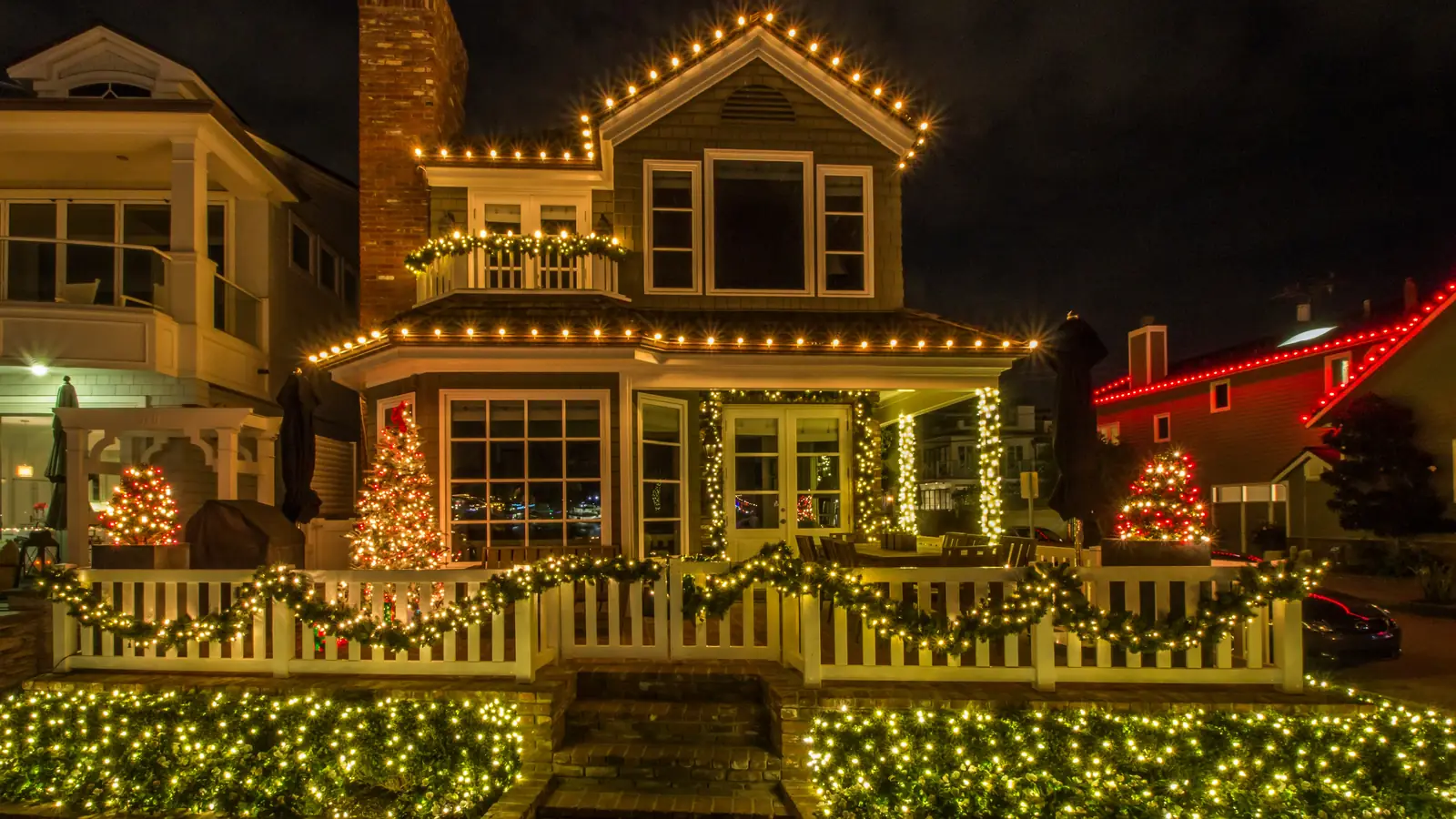
Clip the lights to your gutters with plastic gutter clips, work from a ladder rather than the roof, and never put a nail or staple through a shingle. That's most of it. The rest is about the small things that turn a weekend of decorating into a roof repair in the spring: clips that pry shingles up, a string yanked down in January, and a ladder leaned on a roof covered in frost.
We repair shingle roofs across the Lehigh Valley, and holiday decorating is easy on a roof when it's done from the edge. Here's how to keep it that way.
Why a nail or staple in a shingle causes a leak later
A shingle roof sheds water because every piece overlaps the shingle below it with no openings. A staple driven through a shingle makes an opening, and it sits right where water runs. IKO, which makes asphalt shingles, puts it plainly: never poke a hole in your asphalt shingles, or any other part of your roof, no matter how small, and never puncture the roof with staples or nails.
The trouble is that the damage doesn't show when you make it. The lights come down, the staple holes stay, and the first sign may be a stain on a ceiling after a later rain. By then nobody connects the stain to the decorations. A leak like that isn't always right above the stain either, which is why tracing it back to where it starts is the first thing we do on a roof repair.
The same goes for the fascia, the soffits and the ridge. If a hook needs a hole, it's the wrong hook for a roof.
Use clips that grip the gutter, not clips that go under the shingles
Plastic light clips that hug the gutters but don't leave a lasting mark are the safest way to run lights along a roofline. They snap onto the gutter lip, hold the bulb or the wire, and come off without a trace.
Be careful with clips sold for shingles. Some are designed to slide under a shingle tab, and IKO recommends avoiding clips that tuck under shingles. Here's why. Each asphalt shingle has a strip of sealant that bonds it to the shingle below and keeps the tab down in wind. Prying a tab up to fit a clip can break that bond. The sealant softens in the sun to make that bond in the first place, so it needs warmth, and shingle makers warn that shingles may not seal properly in cold weather. A tab you lift in late fall may not stick back down until the weather warms up, and the wind can catch a loose tab.
Skip deck clips too. They're made for railings and won't sit securely on a roof edge. If your house has no gutters, take extra care that nothing you attach lifts a shingle enough to break the sealant bond to the shingle below it.

Work from the ladder, never the roof
Every light along the eaves can be hung from a ladder, and that's where IKO says the job belongs: never stand or walk on the roof. IKO advises that only a professional should walk on a roof, and only sparingly, because foot traffic risks damaging the shingles. Staying on the ladder also keeps you off a slope that may be slick.
These habits make the ladder part safer:
- Keep hold of the ladder while you clip.
- Move the ladder often instead of leaning out to reach the next clip.
- Have someone with you the whole time, footing the ladder and handing things up.
- Wait for a dry day. Don't hang lights with snow or ice on the roof or the ground, or in wet weather.
If a display needs someone up on the roof itself, such as lights along the ridge or a figure on the slope, it's worth asking whether it needs to go there at all. A roofline traced at the gutters reads just as well from the street.
Clean the gutters before the clips go on
A gutter with lights clipped along it is a gutter nobody wants to clean out until spring. That matters here, because clogged gutters make ice dams worse: meltwater that can't drain refreezes at the edge of the roof and backs up under the shingles. Clear the gutters and downspouts first, then decorate. If ice dams are something you've had before, our post on ice dam prevention explains why the fix usually starts in the attic.
Use lights rated for outdoor use, follow the light maker's instructions, and if you're not sure how many strings an outdoor outlet can take, ask an electrician. The wiring side is an electrician's call.
Take the lights down the way you put them up
Taking the lights down is where a careful job can come undone. It's cold, everyone's tired of the lights, and the quickest way down is to grab the end of the string and pull. Don't. A pulled string can drag the gutter down and damage the shingles along the way. Unclip it clip by clip, from the ladder, on a dry day.
While you're up there, look along the edge of the roof. These are worth a photo:
- A shingle tab that sits higher than the ones beside it, or lifts in a breeze
- A crease across a shingle where it's been bent back
- A gutter that has pulled away from the fascia or sags between brackets
- A clip, hook or fastener hole left behind in a shingle or the trim
A lifted tab can sometimes be sealed down again by a roofer. A creased or torn shingle usually needs replacing. Either way, it's worth dealing with before the spring rain gets in under it.
When to call us
If you spot any of those signs when the lights come down, or you find old staple holes from someone else's decorating, give us a call or send us a message. We'll come out, find where the problem starts, and set out in writing what it will take to fix. If you'd rather have the whole roof checked, a roof inspection covers the roof, the attic and the rooms below and ends with a written report. Hablamos español.
Book a roof repair visit and have any damage from the holiday lights fixed before it turns into a leak.