


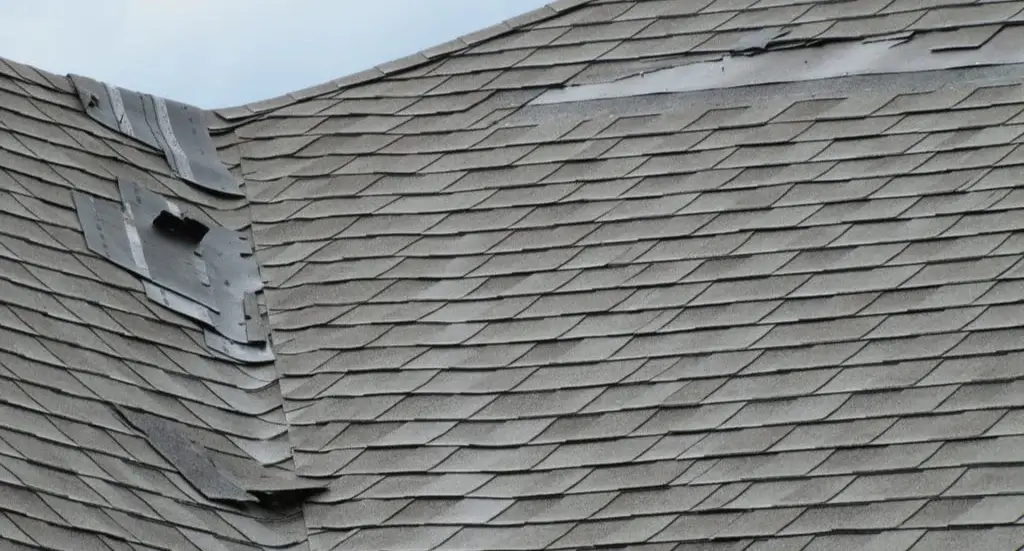
The plainest signs of wind damage on a roof are missing shingles, pieces of shingle in the yard and patches of a different color where the layer underneath is showing. The quieter signs matter just as much: tabs that have lifted or creased, a thin line of scuffed granules just below a shingle edge, ridge caps out of line, and flashing or vents knocked out of place. Damage tends to start along the edges of the roof, which take more uplift than the middle. A shingle that has lost its seal can lie flat again afterward, so a roof that looks fine from the street is not proof that it is sound.
In the Lehigh Valley, the wind that damages roofs usually arrives with a thunderstorm or a strong weather system passing through. Either can tear shingles off, or leave damage that is easy to walk past.
What follows starts in the yard, moves on to the signs people miss and why shingles let go, and ends with what to do before the storm damage is repaired. Insurance claims have their own post, so this one stays on the roof.
Which signs of wind damage can you see from the ground?
Start in the yard. Shingle pieces on the lawn, in the flower beds or against a fence are the plainest evidence there is. A piece the color of your roof tells you where it came from. Then step back far enough to see each slope whole. A missing shingle usually shows as a patch of a different color, because the layer beneath it is exposed.
Next, follow the edges. Look along the ridge for caps that sit crooked or are gone, and along the bottom edge and the gable ends for shingles peeled back. Check the metal too: flashing lifted off a chimney, a vent knocked sideways, a gutter sagging off the fascia. Our guide to roof flashing repair shows what failing flashing looks like. Under the eaves, look for missing or bent vinyl and aluminum soffit panels, which FEMA singles out as vulnerable to wind in its hurricane guidance for sloped roofs.
None of this needs a ladder, and the morning after a windy night is no time to climb one.
Which wind damage is easy to miss?
These are the signs people tend to walk past:
- Tabs that lift and drop in a breeze, or sit a little higher than the shingles beside them
- A crease across a shingle where the wind folded it back, which stays after the shingle settles flat
- A thin line of scuffed or missing granules just below a shingle edge, worn by the shingle above flapping against it after it lost its seal
- New stains on a ceiling or in the attic after the next rain
A shingle can also lose its seal without showing any of these, and lie flat between storms looking normal.
Why does wind lift shingles that were nailed down?
Because nails are only part of what holds a shingle in place. Each asphalt shingle also carries a strip of sealant that softens in the sun and bonds it to the shingle below. Testing by the Insurance Institute for Business & Home Safety (IBHS) found that the strength of that seal is the most important factor in how self-sealing shingles stand up to high wind. Wind flowing over a roof pulls up on it, much as air lifts an airplane wing, and the seal keeps each tab down.
That seal does not last forever. According to IBHS, the sealant weakens as the years go by, and the roof becomes more vulnerable to high wind as it does. On older roofs some tabs come unsealed entirely and offer no resistance at all. Once one tab fails, the damage can cascade. The shingles around it tear away, the underlayment faces wind it was not built for, and the roof stops shedding water.
New roofs have a weak spot of their own. The sealant needs warmth to bond, and manufacturers warn that shingles may not seal properly in cold weather. A roof put on late in the fall may not seal fully until the weather warms up.
Where on a roof does wind damage start?
Usually at the edges. The same FEMA guidance says the border of a roof is more at risk from wind uplift and wind-driven rain than the rest of it. That means the eaves and the slanted rake edges at the gable ends. A starter strip also runs along the eaves and rakes to resist uplift. When you scan a roof, give the bottom course, the gable edges and the ridge the most attention.
Where the house stands matters too. IBHS explains that wind speeds up as it is forced over a hill and arrives stronger across open ground. Buildings and trees slow it down but make it gustier. A house high on South Mountain above Allentown meets the wind with far less in the way than a rowhome on a packed city block.
How strong a wind does it take to damage shingles?
That depends on the roof as well as the storm, since a well-sealed shingle can ride out wind that would strip an old, unsealed one. As a rough guide, the National Weather Service says isolated wind damage is possible once winds are sustained at 40 to 50 mph. Gusts do most of the harm. IBHS notes that these short peaks in wind speed put the highest pressures on a building.
The wind rating printed on a bundle of shingles is a lab result. Ratings come from ASTM tests such as ASTM D7158, which measures how well a sealed shingle resists uplift. The standard itself names conditions on a real roof that affect sealing and that the test does not address, including temperature, dirt and debris, and nails that are misaligned or not driven fully home. A highly rated shingle can still lift in a moderate gust if it never sealed or has lost its seal with age.
Can lifted shingles be sealed down again, or do they need replacing?
Some can be sealed. IBHS notes that when an asphalt shingle roof comes unsealed, a roofer may be able to reseal the shingles with added sealant. That suits a tab that lifted but did not bend or tear.
A creased, torn or missing shingle is damage of a different kind and calls for a replacement. A missing one is the most urgent, because it leaves the underlayment to face wind and rain on its own. On an older roof where seals are failing across whole slopes, resealing a few tabs does little for the rest. At that point the question is how much life the roof has left. Our roof repair page lists the signs that call for a repair.
What comes first once you find the damage?
Photographs. The Pennsylvania Insurance Department advises taking photos and video of storm damage before any clean-up or repair. It also encourages immediate temporary repairs to stop further damage. On a roof, a temporary repair means a roofer covering the opening, not you on a ladder in the wind.
The department also tells homeowners with storm damage to contact their agent or insurance company right away, and to keep a record of who they spoke with and when. Our post on roof insurance claims after wind and storm damage covers the claim itself. If the same storm brought hail, our guide to hail damage on asphalt shingles explains what to look for.
It also helps to find the paperwork from your last roof job, since shingle makers publish wind warranties for their products.
What happens when you call us about wind damage?
After a storm, we start with an immediate inspection to see how far the damage goes and which areas need repair. Critical repairs come first, to stop further damage, and our team is equipped to handle emergency storm damage repair across the Lehigh Valley. Then we restore the roof as a whole.
We specialize in shingle roof repair, and that includes tracing a leak back to where it starts. That matters with wind damage, because the stain inside is not always below the lifted shingle. If you are making an insurance claim, we can assist with it. You also get a no-cost estimate that sets out the roof repairs needed before any work begins.
Should you wait to see whether the roof leaks?
No. Waiting for a stain means waiting for water to reach the deck, the insulation and the ceiling first. A shingle that lost its seal in one storm has less holding it down in the next. Where shingles blew off, the underlayment is taking the weather alone.
Do the ground-level check while the storm is fresh. If you found any of the signs above, or your roof has some years on it, book a roof inspection. The sooner a lifted or missing shingle is dealt with, the less chance water has to reach the wood underneath.