


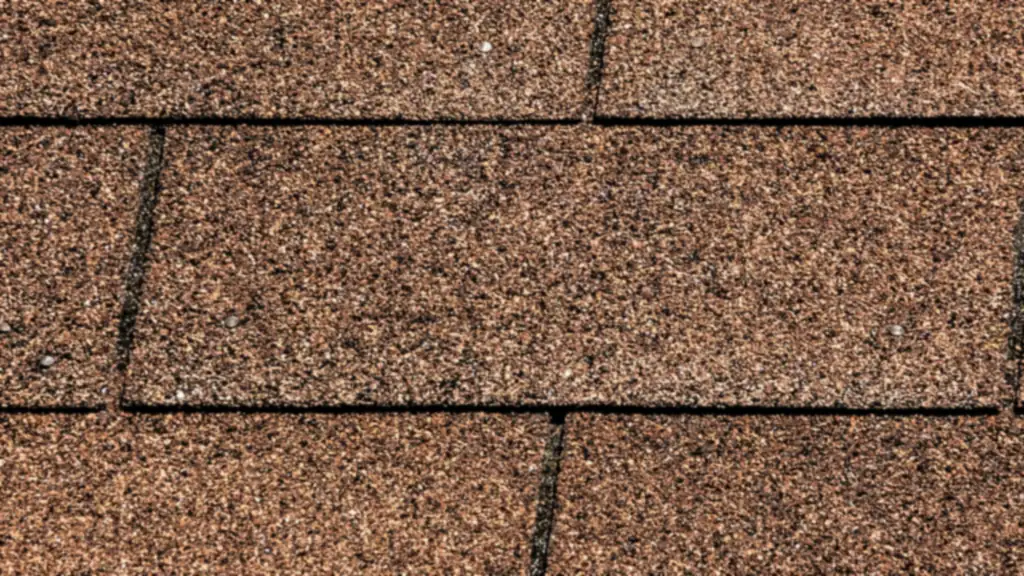
A sprinkle of grit in the gutters of a new roof is expected. A deep layer on an older roof, bare dark patches on the shingles, or a fresh pile at the downspout after a hailstorm are a different story, and they're worth a closer look before winter weather sets in.
Here's how to tell what you're looking at, what you can check from the ground, and what we look at when we come out.
What those granules do for your roof
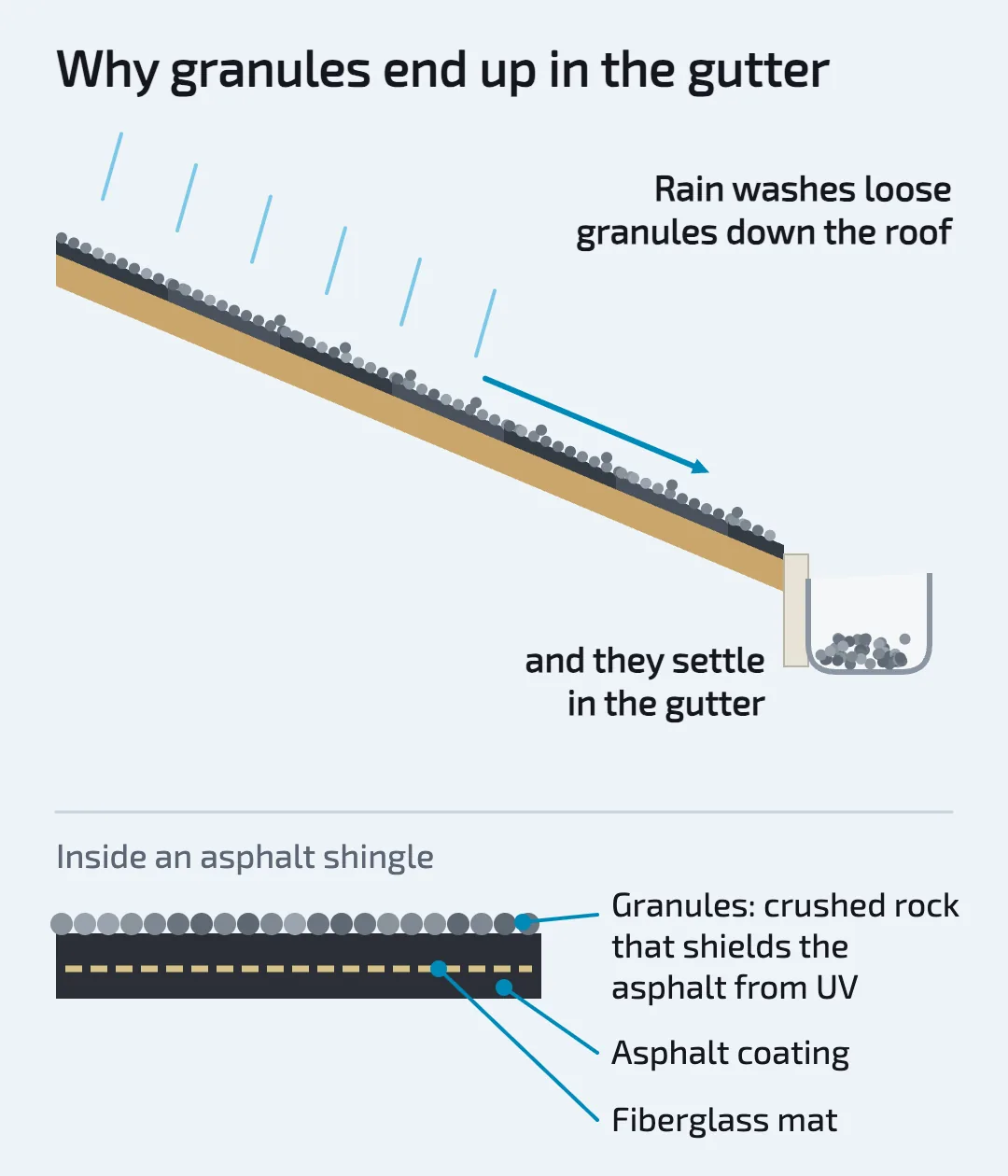
An asphalt shingle is a fiberglass mat coated in asphalt, with a layer of granules on top. Those granules are crushed rock particles pressed into the surface of the asphalt, and they block ultraviolet light from reaching it. That matters because, according to a guide from the shingle maker CertainTeed, UV light that reaches unprotected asphalt ages it prematurely.
They do more than shade the asphalt. Granules also reflect sunlight to help keep the roof cooler, add weight that helps the adhesive strip bond and resist wind, protect the shingle from weathering and abrasion, and improve its fire resistance.
So the grit in your gutter is a piece of your shingles' protection that has come off. Whether that's a problem depends on how old the roof is, how much is coming off, and where on the roof it's coming from.
Why a new roof sheds grit
When shingles are made, some granules end up wedged between the ones pressed into the asphalt, without being pressed in themselves. Storm runoff is likely to wash those loose granules off and into the gutters. InterNACHI's roof inspection guide puts it plainly: "It's common to see an accumulation of granules in the gutters of fairly new roofs."
The same guide draws a line, though. If granules are piled deep in the gutters, it says to look carefully at the shingles to see whether they're losing granules prematurely. If your roof is new and you're seeing more than a sprinkle, raise it with the contractor who installed it.
What ordinary aging looks like
On an older roof, the bond between the granules and the asphalt wears out, and rain carries the loose granules away. When that loss is even across the whole roof, InterNACHI's guide says it is "usually a result of normal weathering". The roof looks evenly worn, with no patches that stand out.
Even wear like this is the shingles getting older. It's a reason to start planning, and our guide to how long shingle roofs last in Pennsylvania explains what affects that.
Patterns that point to something else
Loss that isn't even is the kind to pay attention to. The granule loss chapter of InterNACHI's roof inspection series describes patterns that point away from plain old age:
- Loss on the slopes that face one direction. The guide says this may come from more sun or storm exposure, and that south- and west-facing slopes are "more likely to take a beating."
- Wear that follows the shingle layout. Shingles from different production batches can weather at different rates, and the giveaway is deterioration that follows the offset pattern the shingles were laid in.
- Small spots where the surface has come away. The guide calls this flaking, a localized delamination that can come from impurities in the asphalt or weak spots left in manufacturing.
- Pockmarks. Blisters lose their granules when the top of the blister erodes away, and blistering adds to granule loss on an aging roof.
- A worn track across the roof. Loss along a natural path of travel is something the guide puts down to scuffing from foot traffic.
None of these is something to diagnose yourself from a photo on your phone. They're reasons to have someone look at the shingles up close.
After a hailstorm
Hail can loosen granules, and on older roofs, InterNACHI notes, "even marble-size hail may loosen granules". What you'd see are dark, roughly round spots where the granules are gone and a pile of granules at the bottom of a downspout. Our hail damage post walks through how to tell hail damage from ordinary wear.
If you're wondering about insurance, here's general information only. InterNACHI's guide says "long-term, uniform granule loss is not considered functional damage by insurance companies". What your own policy covers is between you and your insurer, so read the policy and ask them directly. What we can do is inspect the roof, photograph and document what we found, and write up any repair it needs. The claim stays yours: we don't file or negotiate it.
What you can check yourself
You can do these checks without setting foot on the roof. Stay on the ground: no shingle is worth a fall.
- When the gutters get cleaned, look at what comes out. Granules look like small, colored bits of crushed stone. Check the ground at the bottom of each downspout too.
- From the yard, look over every slope you can see, with binoculars if you have them, for dark patches where the asphalt shows through.
- Compare the slopes. Even wear everywhere points to age. Loss on some slopes and not others, or in a pattern, is worth having looked at.
- Take dated photos of the gutters and the slopes, so you can tell later whether it's getting worse.
What we look at when we come out
A roof inspection from us covers the outside of the roof, where we check for damaged or missing shingles and signs of wear. We go into the attic to look at insulation, ventilation and signs of water damage, and we check the rooms below for water stains. You get a written report of what we found, with our recommendations for any repairs or maintenance.
That report is what you decide from. If the shingles still have life in them and the loss is limited, a roof repair may be enough. If the wear is too widespread, a roof replacement takes the old roof off, repairs any damage to the deck underneath and puts a new roof on. Either way, you know what's going on before anyone starts work.
We inspect homes across Allentown and the Lehigh Valley, and hablamos español. If you're finding granules in your gutters and want to know what they mean for your roof, book a roof inspection or send us a message with a photo of what you're seeing.