

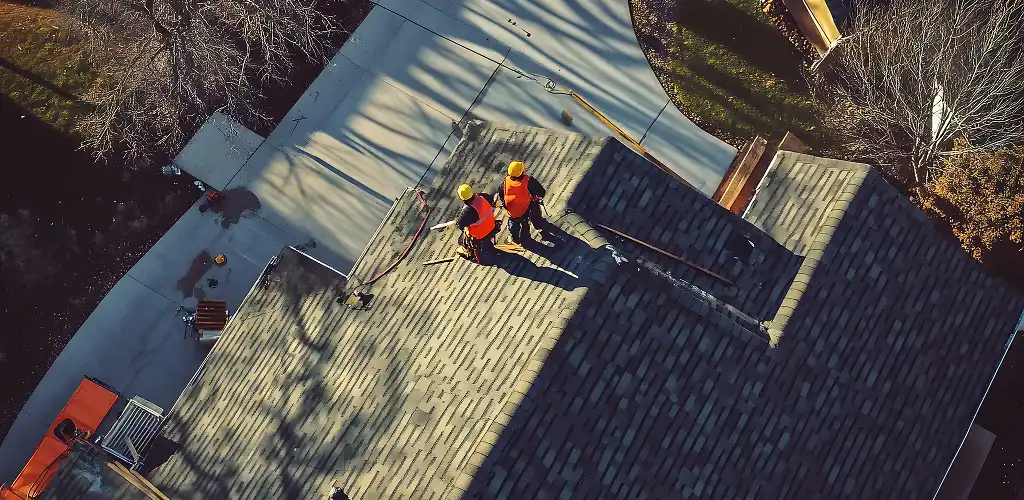
A roof inspection is a close look at the whole roof, from the shingles and flashing outside to the attic and the ceilings below, written up so you know what’s sound and what needs work. It’s how you find out whether a roof needs a repair, a replacement or nothing at all while any problem is still small.
Outside, on the roof
We start outside. From the ground and then up close, we look at every slope for shingles that are missing, cracked, curling or no longer lying flat, and for bare spots where the granules have worn away.
Then we go to the places where roofs usually leak. That means the flashing around chimneys, vent pipes and skylights, the valleys where two slopes meet and carry the most water, and the gutters and downspouts that take it off the house. We look at the roofline itself too. A dip or a sag can mean the decking or the framing underneath has taken on water.
The attic tells us where the water got in
Plenty of roof trouble shows up inside before you can see it outside. In the attic we look for water stains on the boards and rafters, damp insulation, mold or a musty smell, and daylight coming through the roof deck. We check the insulation and the ventilation as well. A warm attic with poor airflow melts the snow on the roof and feeds the ice dams that push water under the shingles at the eaves.
Then we check the ceilings and the tops of the walls in the rooms below. A stain on the ceiling is the symptom. The attic usually shows us where the water came in.
The report you get
When we’re done, you get a written report of what we found, with photos, and our recommendations for any repairs or maintenance the roof needs. If the roof is sound, the report says so. If it needs work, we follow up with a free estimate, so you see the scope and the price before anything starts. If you already know what’s wrong, such as a leak you’ve traced, ask for the free estimate instead.
If a storm caused the damage, the photos and the report are the kind of record your insurer may ask for. We document what we found and explain it, and the claim stays yours: we don’t file, process or negotiate it. Our page on roof insurance claim help explains where we fit in.
Checks you can do from the ground
You can do a useful first pass yourself. Do it from the ground, not the roof. The National Roofing Contractors Association doesn’t recommend homeowners walk on a roof without the experience and equipment to do it safely, and a damp shingle or a soft deck gives no warning.
- Walk around the house in good light and look at each slope. Binoculars or your phone’s zoom help. Look for missing, curled or cracked shingles, and for small bumps where a nail has started to back out.
- Stand across the street and look at the roofline. It should be straight. A dip or a wave needs a professional look soon.
- Check the gutters, and the ground under each downspout, for granules. They look like dark, coarse sand, and they come off shingles as they age.
- Look at the flashing around the chimney and the vent pipes for rust, bent metal or cracked sealant.
- Inside, check the upstairs ceilings and the tops of outside walls for brown rings, peeling paint or bubbling drywall. A stain that stopped spreading still counts. It usually means the leak only runs in certain weather.
- If you can get into the attic safely, go up on a sunny day, switch off the light and look for pinholes of daylight in the roof boards, along with damp insulation or dark streaks on the wood.
Take dated photos of anything that looks off, so you have something to compare next season. Don’t pressure-wash moss or algae off the shingles, because it strips the granules. And don’t smear sealant over a spot you think is leaking until someone has found the cause.
How often to have the roof inspected
At least twice a year, ideally in spring and fall. That’s what the National Roofing Contractors Association recommends, because asphalt shingles take the most wear in freezing weather and in the hottest summer sun. A spring inspection finds what the winter did, and a fall one gets the roof ready for the next. In the Lehigh Valley you get both kinds of weather.
Between those, book one:
- after a storm with high wind, hail or heavy rain, even if you can’t see anything from the ground
- when you can see damage, such as loose or missing shingles
- as soon as a water stain appears on a ceiling or wall
- before you buy a house
- before and after other work on the roof, such as solar panels or a new skylight
Our guide to winter roof inspections covers the fall check before the snow and the spring check after it.
Before you buy a house in Allentown
Much of what goes wrong with a roof can’t be seen from the street: soft decking, cracked shingles, failed flashing, old leaks in the attic. That’s common on older houses. Have the roof inspected before closing, not after.
A written report with photos is evidence you can put in front of the seller. You can ask them to fix the problem first, to give you a credit toward the repair, or to lower the price. And if the roof is sound, the report tells you what upkeep it needs over the next few years and gives you a sense of how much life it has left, so a replacement doesn’t catch you by surprise soon after you move in.
Booking an inspection
To book a roof inspection, call us at (484) 553-0213 or send us a message. We’re based in Allentown and inspect homes across the Lehigh Valley.