

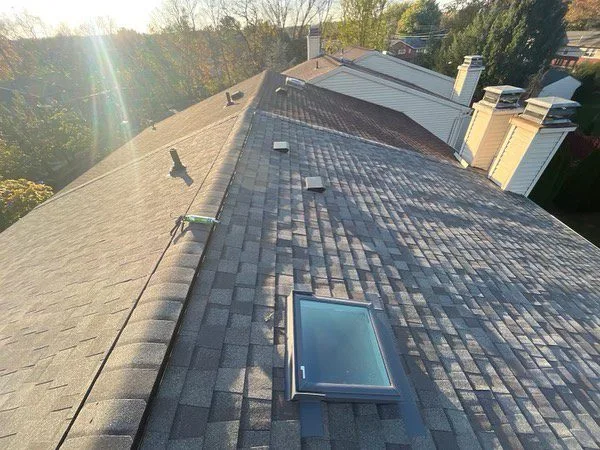
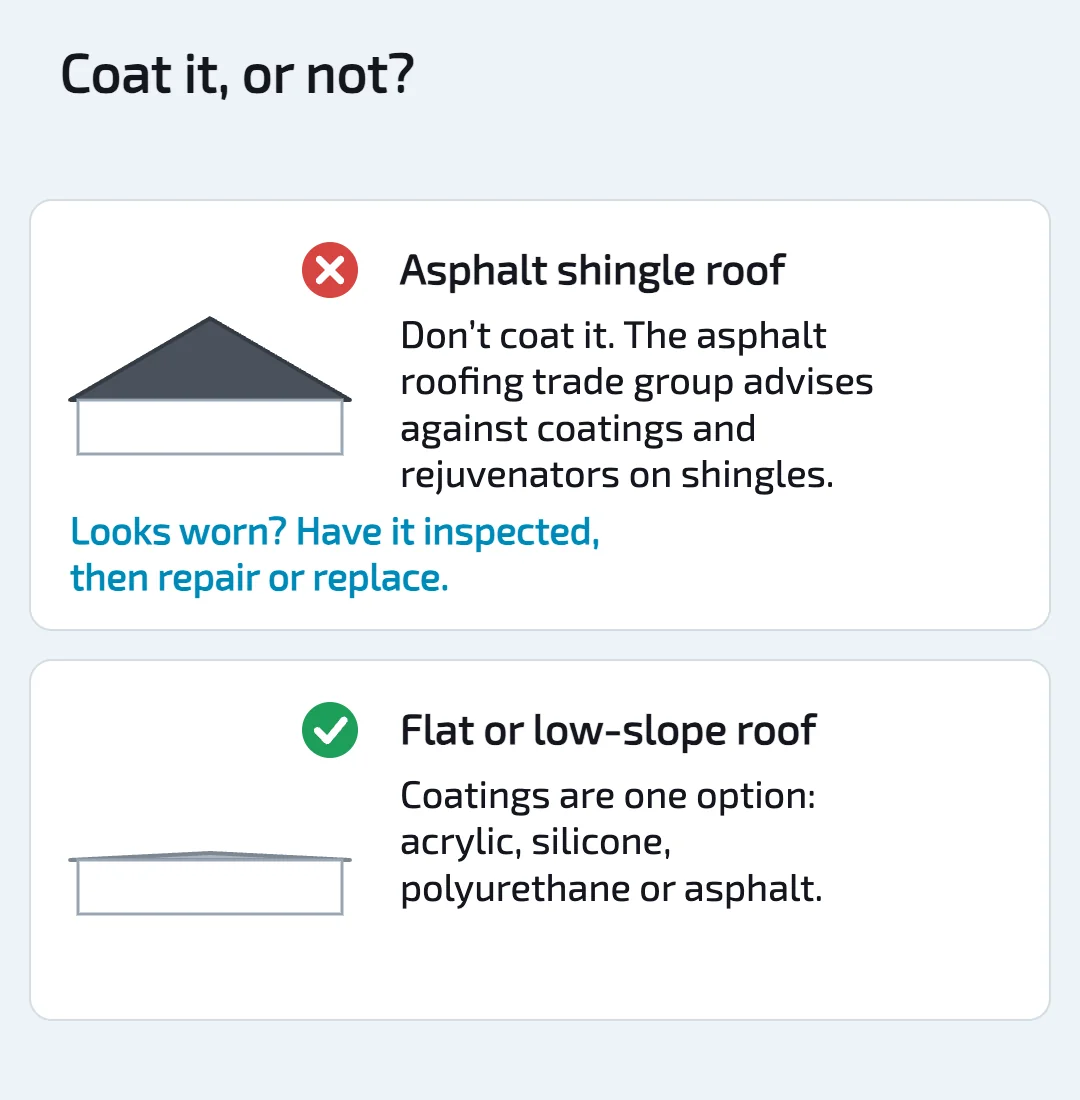
If your house has an asphalt shingle roof, don’t coat it. The Asphalt Roofing Manufacturers Association strongly advises against putting any kind of coating or “rejuvenator” on installed shingles. Roof coatings are made for flat and low-slope roofs, like a porch roof or a flat-roofed addition. If your shingles are looking tired, what they need is a proper inspection, and then a repair or a new roof.
Why coating shingles does more harm than good
These are the problems the shingle makers’ trade group lists:
- A coating that seals the gaps between the shingles can trap moisture in the roof.
- As the coating shrinks, it can make the shingles curl or cup and loosen their granules.
- Many of these treatments need to be reapplied regularly to keep the roof looking even.
- A coating can change how the shingles perform, including their fire rating, algae resistance and impact resistance, and building codes may not allow it at all.
- There’s little documentation that it delivers what’s claimed for it, such as a longer-lasting roof or energy savings.
Many shingle manufacturers advise against these treatments too. So if someone offers to spray or roll something onto your shingles, check with the maker of your shingles and with your local building and zoning office before you agree to it.
Where roof coatings do make sense
A roof coating is a liquid that’s applied to the roof and cures into a continuous layer. It’s used for roof maintenance or repair, or as part of a roof system. In its guide to cool roofs, the Department of Energy lists coatings among the options for low-slope roofs; for steep roofs it lists cool shingles, tile or metal instead.
The main kinds are named for what they’re made from:
- Acrylic, built on an elastomeric acrylic latex binder.
- Silicone, built on silicone polymers.
- Polyurethane, a urethane that cures with moisture into a rubbery layer.
- Asphalt, an asphalt base, sometimes with aluminum pigment mixed in.
A white or reflective coating keeps a low-slope roof cooler in the summer sun. In a Pennsylvania winter it cuts the other way: a cool roof may increase the need for heating, though in mixed climates the winter penalty can be smaller than the summer savings.
What a worn shingle roof needs instead
People usually start looking at coatings because something about the roof worries them. Each of those signs means something different:
- Grit in the gutters is shingle granules. A little is normal, and our post on granules in your gutters explains when it’s a sign of trouble.
- Dark streaks running down the roof are usually algae. It spoils the look, but there’s no scientific evidence it damages the shingles. Our post on how long shingle roofs last in Pennsylvania covers streaks and moss.
- Curling, cracked or missing shingles, or a stain on a ceiling, can call for a roof repair. Our guide to roof repair signs goes through what to look for from the ground.
- A roof near the end of its life won’t get younger with a coat of anything. Our guide to repair or replacement helps you weigh the two.
If you’re not sure which of these you’re looking at, a roof inspection gives you a written report on the whole roof.
Frequently Asked Questions
Can you put a roof coating on asphalt shingles?
It isn’t recommended. The asphalt roofing trade group strongly advises against any coating or rejuvenator on installed shingles, because it can trap moisture, curl the shingles and change how they perform.
Will a roof coating make my shingle roof last longer?
There’s little documentation that it does. A worn shingle roof needs a repair or a replacement.
What kind of roof is a coating for?
Flat and low-slope roofs. The common types are acrylic, silicone, polyurethane and asphalt-based coatings.
What should I do if my shingle roof looks worn?
Have it looked at before you spend money on it. Call (484) 553-0213 and we’ll tell you what we find.
Worried about an aging roof? Call (484) 553-0213 or request an estimate.