

Ice and water shield is a self-adhering underlayment: a sheet of polymer-modified asphalt that sticks to the roof deck under the shingles. Along the eaves, where it’s used most, its job is to help keep meltwater from an ice dam out of the roof deck. It goes on a roof’s other weak spots too.
How it differs from ordinary underlayment
Shingles shouldn’t go straight onto the wood deck, and Pennsylvania’s residential code requires an underlayment under them. It’s a second layer that shields the deck from wind-driven rain that gets under the shingles. You’ll hear about three kinds:
- Asphalt-saturated felt, the traditional one. The asphalt makes it water-resistant, but the felt still lets some vapor through and soaks up some moisture.
- Synthetic underlayment, made from polymers, which is lighter than felt and typically covers more roof per roll.
- Self-adhering underlayment, the ice and water shield, which bonds to the deck and to itself where the sheets overlap.
The difference that counts is the nails. Every shingle is nailed down through whatever lies under it. The asphalt in a self-adhering sheet seals around the shank of each nail, so water forced up under the shingles is unlikely to get through, nail holes and all.
Where it goes
The eaves come first. In areas with a recorded history of ice forming along the eaves and backing water up, Pennsylvania’s residential code requires an ice barrier there, either a self-adhering sheet or two layers of ordinary underlayment cemented together. It runs from the edge of the roof to a point inside the line of the outside wall, so it reaches past the overhang onto the part of the roof over the house itself.
It also goes on the other critical areas, often the rakes, the sloped edges of each gable, and the valleys. The valley lining has a post of its own, on roof valley leaks. Around chimneys, skylights and plumbing vent pipes, it works as a second layer of protection and part of the flashing system.
On a low-pitched shingle roof, it’s commonly laid over the whole deck. The code requires either that or a double layer of ordinary underlayment on those slopes.
Covering the whole roof with it
Some roofs get it everywhere. The catch is that a self-adhering sheet holds back vapor and air as well as water. Damp air rising from the house into the attic may condense on its underside along the deck joints. That moisture can swell and damage the wood, and lead to mold and stained ceilings below.
Balanced attic ventilation, a vapor retarder on the warm side of the attic floor and insulation across the whole attic floor can all help lower that risk. Our posts on roof ventilation systems and attic insulation upgrades go into the vents and the insulation.
When the old roof comes off
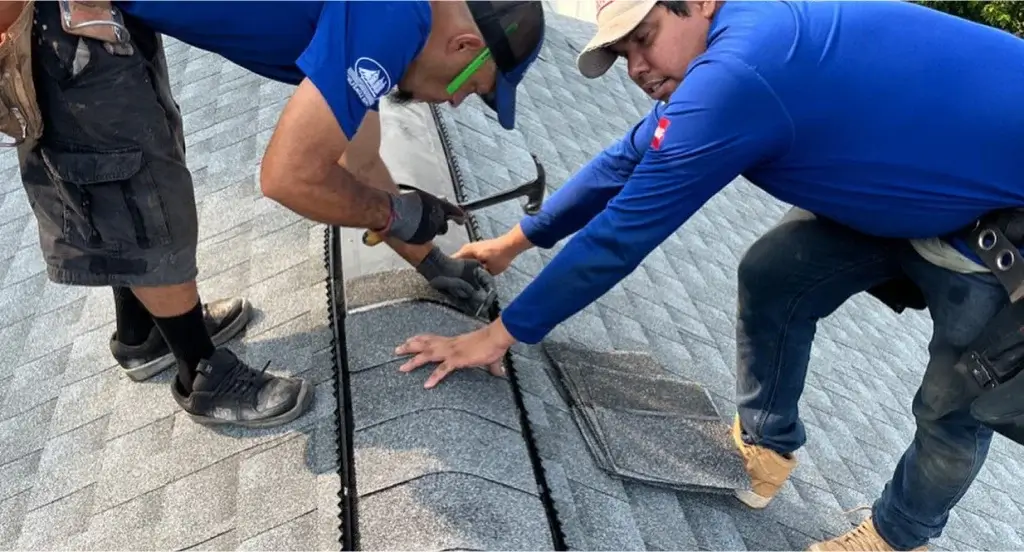
Self-adhering underlayment has to bond firmly to the deck to do its job, so it can be hard to strip off without damaging the wood. Taking it off is recommended wherever that can be done without damage, because it lets the deck underneath be checked. Where a single layer won’t come off cleanly, a new layer over it may be allowed, depending on the maker’s instructions and the local code.
If your roof is due, ask each roofer what will happen to the old ice and water shield, and to the decking under it. We don’t charge for a roof replacement estimate, and ours comes in writing. To arrange one, call (484) 553-0213.