

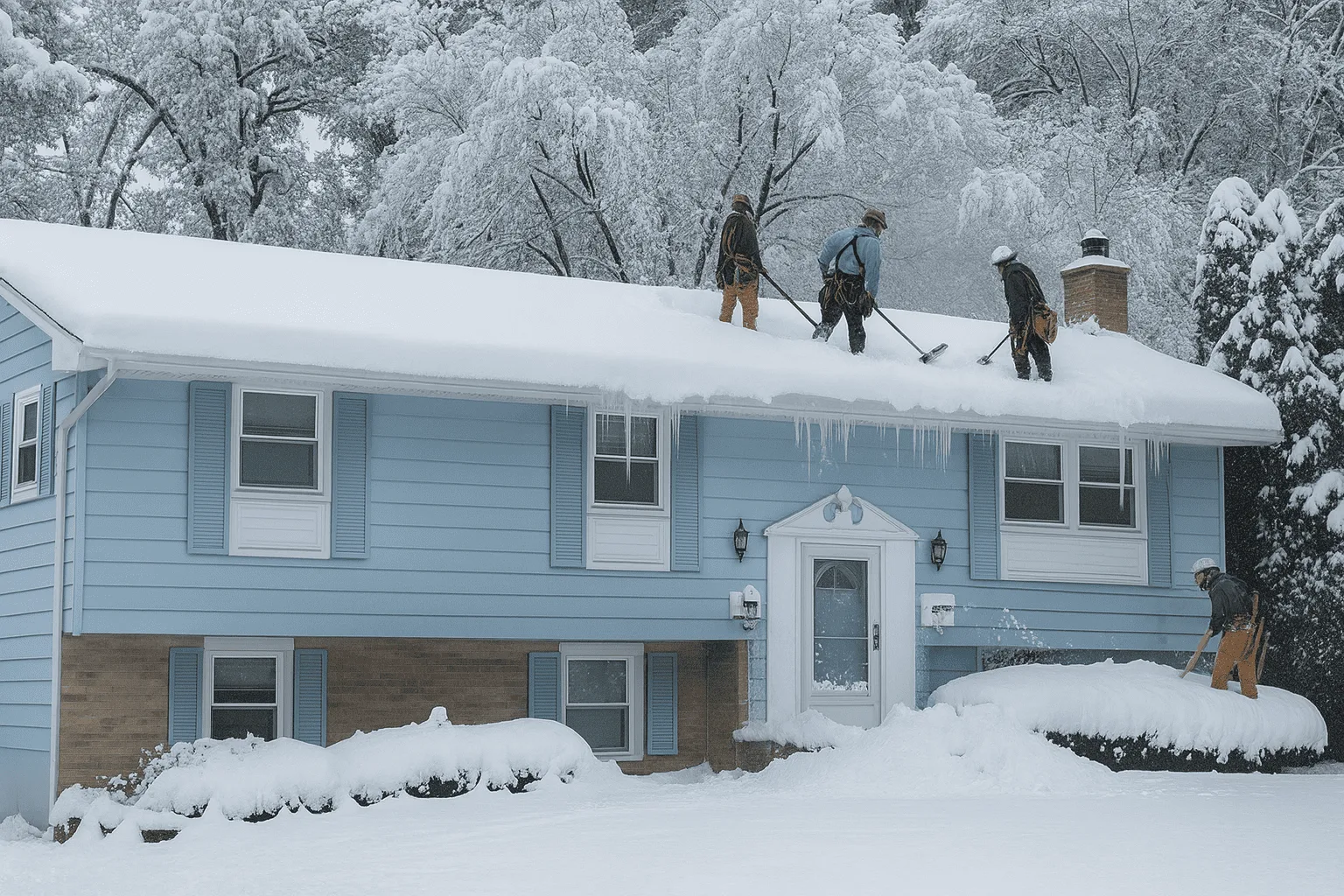
The first heavy snowfall of December paints a beautiful picture across the Lehigh Valley, but it can also spell trouble for your roof. Each winter, thousands of pounds of snow and ice accumulate on homes across Allentown, Bethlehem, and Easton, putting enormous pressure on shingles, trusses, and gutters. Homeowners often underestimate the risk of aroof snow load in Lehigh Valley, assuming their structure can handle whatever winter brings. Unfortunately, that’s not always the case
AtIn The Light Roofing, our crews have seen firsthand what happens when snow buildup goes unchecked. From minor leaks to full structural stress fractures, excess weight can compromise even a well-maintained roof. This educational guide breaks down what every homeowner should know aboutroof snow load in Lehigh Valley, how to measure it, and what steps to take before it causes damage
Heavy December Snow Build-Up
December in Lehigh Valley is unpredictable. Some years, the season starts mild, but other times, snowstorms roll in early and stay for weeks. According to NOAA, the Allentown area averages about 33 inches of snow per year, much of it packed into just a few major storms. When wet, heavy snow piles up quickly, adding hundreds of pounds of stress to your roof overnight
That’s when understandingroof snow load in Lehigh Valley becomes critical. The term refers to the total weight your roof must support from accumulated snow, ice, and water. Even a few inches of dense snow can push your roof close to its limit, especially on older homes or low-slope designs
What Is Roof Snow Load?
Simply put,roof snow load in Lehigh Valley measures how much snow your roof can safely hold before structural damage becomes a risk. The load depends on several factors, including
- Roof design: Flat or low-pitched roofs retain more snow than steep slopes
- Material strength: Wood trusses and older rafters handle less weight than modern steel or engineered wood systems
- Snow type: Wet snow is much heavier than light, powdery flakes
- Temperature swings: Freeze-thaw cycles compact snow into denser, heavier layers
The general rule is that one inch of wet snow equals about one pound per square foot. That means six inches of snow across a 1,500-square-foot roof can add nearly four tons of extra weight
Our team frequently measures snow depth and density during winter service calls to calculate approximate load stress. When conditions exceed safety thresholds, we recommend professional clearing to prevent collapse or leaks
How Lehigh Valley’s Climate Affects Roof Loads
The Lehigh Valley sits in a transitional weather zone, cold enough for frequent snowfall but warm enough for rain and melting between storms. These fluctuations create ideal conditions for heavyroof snow load in Lehigh Valley events
Daytime thaws cause rooftop snow to melt slightly, then overnight freezes refreeze it into dense layers of ice. Over time, these layers compress, trapping moisture and drastically increasing weight. Gutters and valleys become clogged with ice dams, preventing drainage and further increasing roof stress
Roofing professional and GAF-certified installer, Eric M., explains
“In Allentown, we see roofs fail not from a single storm, but from repeated snow-and-ice cycles. The weight sneaks up on homeowners until the attic beams start to bow.
That’s whyIn The Light Roofing encourages every homeowner to perform seasonal inspections and preventive maintenance well before the first major storm
Signs of Dangerous Roof Snow Load
Knowing the early warning signs of a dangerousroof snow load in Lehigh Valley can save your home from disaster. Watch for
- Creaking or cracking sounds in ceilings or wall
- Sagging rooflines or bowing rafters visible from the atti
- Doors or windows suddenly sticking (from frame pressure
- Water stains or drips near ceiling
- Icicles forming along gutters or eaves (a sign of ice dams
If any of these appear, evacuate the area beneath the sagging roof section and call a professional immediately. Snow weight can exceed structural capacity faster than you might think, especially when mixed with rain or freezing sleet
How to Estimate Roof Snow Load
You can roughly estimate yourroof snow load in Lehigh Valley using this simple method
- Measure snow depth in several areas of the roof (use a roof rake or safe ground-based pole)
- Estimate density:
- Fresh, dry snow: ~5–10 lbs per cubic foo
- Wet, heavy snow: ~20–25 lbs per cubic foo
- Ice: ~57 lbs per cubic foo
- Multiply: Snow depth (in feet) × density (lbs/ft³) = approximate weight per square foot
If the number approaches 20–25 pounds per square foot, it’s time to clear the roof. Most modern roofs are designed to handle around 40 pounds per square foot, but aging structures or flat roofs can fail well below that
The Risks of Ignoring Roof Snow Load
Ignoring a dangerousroof snow load in Lehigh Valley can lead to several costly outcomes
- Structural strain: Joists and rafters can crack or separate
- Leaks and water infiltration: Melting snow finds its way through nail holes and flashing gaps
- Ice dam formation: Meltwater trapped behind frozen edges seeps under shingles
- Collapsed gutters: Excess weight tears them from fascia boards
- Roof collapse (rare but possible): Especially in older barns, garages, or flat commercial roofs
Our crews often receive emergency calls in January from homeowners who noticed interior leaks only after snowmelt began, by then, damage is already done
Prevention: The Best Defense Against Snow Stress
The safest strategy is prevention. Here’s how to reduce the risk of excessiveroof snow load in Lehigh Valley before and during winter
- Schedule a Pre-Winter Inspection: Have a professional evaluate your roof’s structure, flashing, and insulation before snow season. Ou Roof Inspection identify weak spots that could fail under heavy weight
- Improve Attic Ventilation: Proper airflow prevents uneven roof temperatures, reducing ice dam formation
- Clean Gutters and Downspouts: Clear debris in late fall to ensure meltwater can drain freely
- Trim Overhanging Branches: Prevent additional snow from falling off branches onto your roof
- Install Heat Cables (if necessary): Electric heat cables along roof edges can melt snow and ice dams in trouble spots
- Use a Roof Rake Safely: From ground level, gently remove snow near eaves after each storm to lighten the load
- Avoid DIY Roof Climbing: Never climb onto an icy roof, it’s unsafe and can damage shingles. Leave deep snow removal to professionals
Real-World Scenario: A Lehigh Valley Homeowner’s Close Call
Last December, a homeowner in Schnecksville calledIn The Light Roofing after hearing popping noises from their attic during a blizzard. Upon inspection, our team found over 14 inches of wet snow compacted on their low-slope roof, roughly 25 pounds per square foot of stress
The rafters were beginning to bow, and small leaks had already appeared near a vent pipe. We quickly cleared the snow using specialized soft shovels and snow cutters, preventing potential collapse. Afterward, we reinforced weak truss connections and added an attic vent to improve heat circulation
That homeowner avoided thousands in repairs by acting fast, a perfect example of how awareness ofroof snow load in Lehigh Valley can protect property and peace of mind
When to Call a Professional
You should always contact a qualified roofer if
- Snow accumulation exceeds 12 inches of wet snow or 18 inches of powde
- You see sagging, cracking, or interior leak
- You hear creaks or popping sounds in your atti
- You can’t safely reach or assess the roof from the groun
In The Light Roofing has the proper tools and safety gear to remove excess snow without damaging shingles or gutters. Our crews are trained for cold-weather operations and understand the challenges of Lehigh Valley’s unpredictable winter patterns
The Importance of Post-Storm Inspections
After a major snowstorm, schedule a professional checkup to confirm your roof’s integrity. Many homeowners assume no damage occurred simply because leaks aren’t visible, but internal stress fractures often remain hidden
A post-storm assessment ensures that yourroof snow load in Lehigh Valley hasn’t compromised your structure. Our inspectors look for
- Warped or cracked rafter
- Displaced flashin
- Missing shingles from ice expansio
- Clogged gutter system
This proactive approach prevents secondary issues in spring, such as leaks during heavy rains or early thaw events
How Different Roof Types Handle Snow
Asphalt Shingle Roofs:
Most common in the Lehigh Valley, they perform well with moderate snow if properly maintained. However, trapped ice can cause granule loss and leaks
Metal Roofs:
Excellent at shedding snow naturally, but sharp avalanches can damage gutters if snow guards aren’t installed
Flat Roofs:
Require constant monitoring, as snow doesn’t slide off easily. Professional clearing after each major storm is recommended
Slate and Tile Roofs:
Durable but heavy. Combining slate weight with snow can exceed design limits if the structure is old
Our licensed roofers consider these factors during each winter inspection to create customized maintenance plans for different roof systems
Local Weather Knowledge Matters
Few regions present the same challenges as the Lehigh Valley. A single winter can bring a 50°F swing in a week, rain followed by snow, and then an ice storm, each event affecting roofs differently
The same principle applies locally: unpredictable weather demands proactive maintenance
Our Allentown-based crews have years of experience navigating these patterns, which is why homeowners trustIn The Light Roofing for their winter protection plans. You can als Visit us in Allentown, P to discuss snow-load safety options tailored to your home
Final Thoughts: Stay Ahead of the Storm
Managingroof snow load in Lehigh Valley isn’t about reacting to emergencies, it’s about preventing them. A little preparation now can save you from structural stress, leaks, or costly mid-winter repairs later
Whether you’re in Allentown, Emmaus, or Slatington, our team atIn The Light Roofing is ready to help you navigate the season with confidence. We’ll inspect, maintain, and guide you through every step of winter readiness
Protect your home from snow stress, book a roof inspection.
Frequently Asked Questions
How much snow is too much for a roof?
If you have more than a foot of wet snow or 18 inches of powder, yourroof snow load in Lehigh Valley may exceed safe limits. Call a professional for assessment
How can I tell if my roof is under stress?
Listen for creaks, inspect attic beams for sagging, and watch for ceiling cracks or leaks after storms
Can roof rakes damage shingles?
Yes, if used improperly. Always use a roof rake with a plastic edge and remove snow gently from the ground
How often should I inspect my roof in winter?
After every major storm or when temperatures fluctuate drastically. Consistent inspections prevent hidden damage
Does insurance cover snow-related roof damage?
We can’t make insurance outcome claims, but inspection reports and maintenance records can help document conditions if needed.