

Allentown homes are no strangers to sudden weather swings. After a strong storm, your first priority should be to identify storm damage on the roof. Catching issues early can save you from costly repairs and protect your home’s value and safety.
Why You Should Identify Storm Damage on the Roof Immediately
Pennsylvania’s Lehigh Valley region, including Allentown, often faces intense thunderstorms, hail, and strong wind gusts. These storms can quietly cause severe damage. Whether you live near Hamilton Street or the South Side, it’s essential to identify storm damage on the roof quickly to prevent further harm.
Ignoring minor damage now can lead to:
- Expensive water damage
- Structural deterioration
- Mold and mildew growth
- Insurance claim denials
Let’s break down six clear signs that help homeowners identify storm damage on the roof before it spirals out of control.
Shingles That Are Cracked, Lifted, or Missing
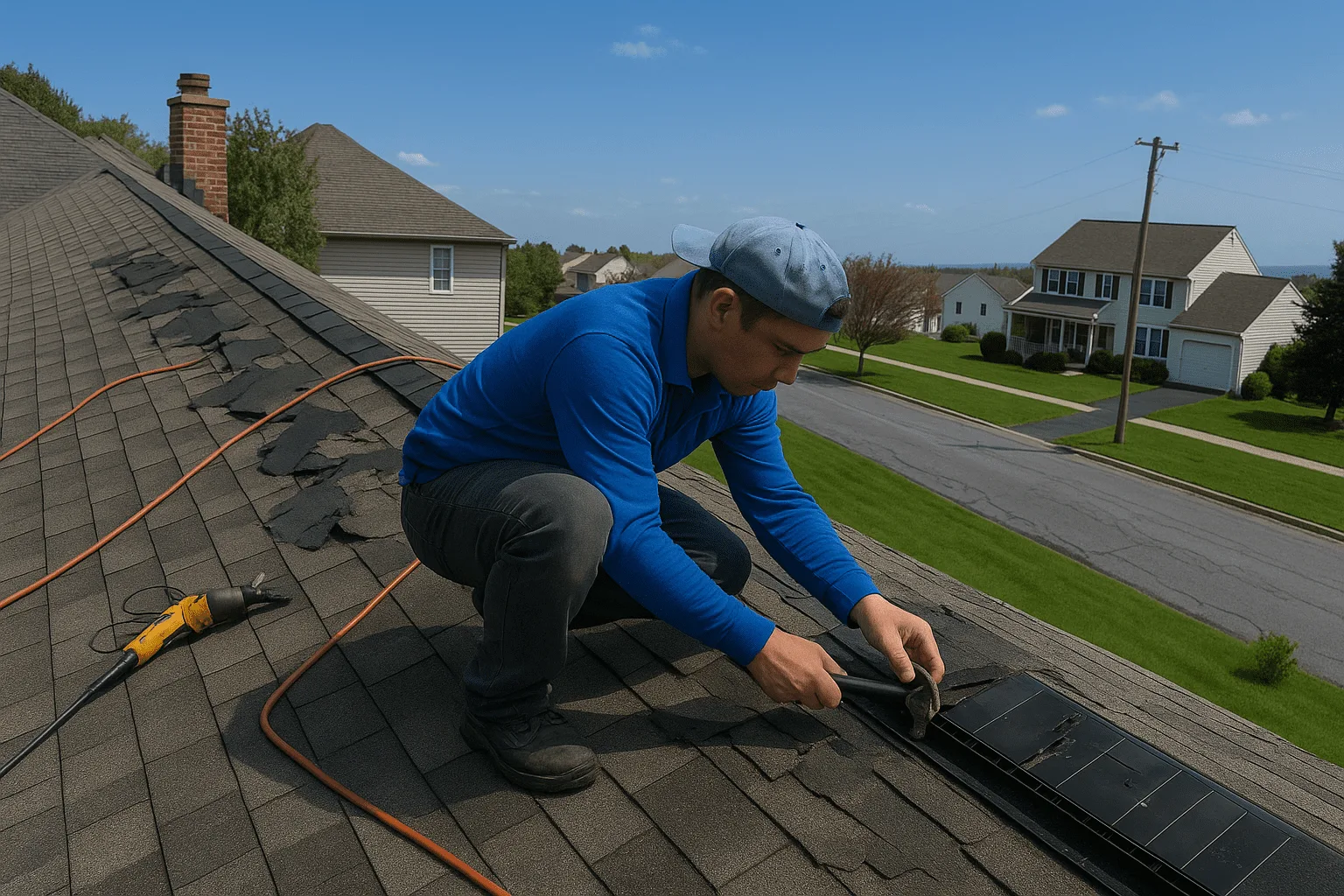
One of the easiest ways to identify storm damage on the roof is by inspecting the shingles. After strong winds or hail, look for:
- Cracks or curls on shingles
- Pieces of shingles in your yard
- Exposed roof decking
Historic homes in areas like West Park often have older roofing materials, making them more vulnerable.
Granule Buildup in Gutters and Downspouts
Granules protect shingles from UV rays and wear. Heavy rainfall or hailstorms can strip them away.
When you clean your gutters, check for black, sand-like particles. If you see a lot, it’s a good sign you need to identify storm damage on the roof and consider immediate repairs.
Water Stains or Leaks Inside Your Home
Check your ceilings and upper walls after every storm. Yellow stains, damp spots, or active drips are strong signals.
When you identify storm damage on the roof early—especially signs of leaks—it prevents mold from growing and saves your insulation from being ruined.
Roofline Changes or Sagging Ceilings
If your roofline looks uneven or your ceiling is bowing inward, act fast. These signs usually mean internal damage to the roof’s support system.
This is a serious issue and a clear reason to identify storm damage on the roof using professional help.
Damaged Flashing, Vents, and Chimneys
Flashing and roof vents protect critical joints and seams. After a storm, they’re often bent, dislodged, or missing entirely.
A good inspection to identify storm damage on the roof includes checking these areas around your chimney and skylights.
Overflowing or Disconnected Gutters
Functional gutters direct water away from your house. After a storm, if they’re sagging or leaking, this can lead to water pooling at the roof edge or foundation.
A damaged gutter system makes it harder to identify storm damage on the roof, but also means more roof and siding problems may be hidden from view.
Next Steps Once You Identify Storm Damage on the Roof
If you suspect damage:
- Take clear photos of any signs.
- Avoid going on the roof yourself.
- Contact your insurance agent.
- Schedule a trusted inspection from local professionals.
We specialize in Allentown’s unique roofing needs and can help you assess, repair, and recover from storm damage. Don’t wait—check out our Storm Damage Repair service to get started.
How to Prevent Future Storm Damage
To reduce the risk of needing to identify storm damage on the roof again in the future:
- Schedule yearly inspections
- Trim tree branches that hang near your roof
- Keep gutters clean and functional
- Upgrade to Class 4 impact-resistant shingles
These steps are especially important in storm-prone areas like the East Side and near Cedar Creek Parkway.
Why Allentown Homeowners Trust In The Light Roofing
We live and work in Allentown, just like you. We understand the unique local climate and how fast it can turn. That’s why we bring decades of hands-on roofing experience to every home.
When you choose us, you’re choosing:
- Quick and reliable service
- Transparent pricing
- Licensed and insured pros
- Local weather expertise
We’re here to help you identify storm damage on the roof and keep your home protected long-term or visit us in Allentown today!
Frequently Asked Questions
What’s the best way to identify storm damage on the roof without climbing up?
Use binoculars from the ground and look for displaced shingles, gutter debris, and visible flashing issues.
Can minor storm damage really lead to big problems?
Yes. Even a few missing shingles can cause leaks and mold. It’s crucial to identify storm damage on the roof right away.
Is roof damage always visible right after a storm?
Not always. Some signs like leaks or mold take time to show. That’s why routine inspections are key.
Should I file an insurance claim every time?
Only if the damage is significant. We can help assess and guide you through the process.
Is professional inspection better than DIY?
Absolutely. Roofing professionals have the tools and experience to safely and accurately identify storm damage on the roof.
What if I didn’t notice the damage for a few weeks?
Still call us. It’s never too late to document and repair storm damage, especially with help from a local expert.