

If squirrels, raccoons, birds or bats are getting into your roof, the order matters. First have any animals removed and make sure nothing is left inside, and only then have the gaps closed and the damage repaired. Seal a hole with an animal or its young behind it and you’ve trapped it in your attic. Below: what you can spot from the yard or hear from inside, who removes the animal, and what a roofer fixes afterwards.
Signs an animal is getting into your roof
You can check all of these without a ladder:
- Scratching, rustling or scurrying in the attic, or noises coming from the fireplace.
- A hole chewed into a vent or the edge of the roof. Gray and fox squirrels use a hole about the size of a baseball.
- Torn or missing shingles.
- Droppings or stains below an attic vent, or nesting material sticking out of one.
- A chimney with no cap, or loose and warped soffit or siding. The Game Commission lists both among the things that draw animals to a house.
Don’t wait long once you hear them. Squirrels chew electrical wiring, which can start a fire, and left long enough their gnawing can weaken rafters. If you’ve also found a stain on a ceiling, our post on water leaking from the ceiling helps you work out where it’s coming from.
Which animals get in, and how
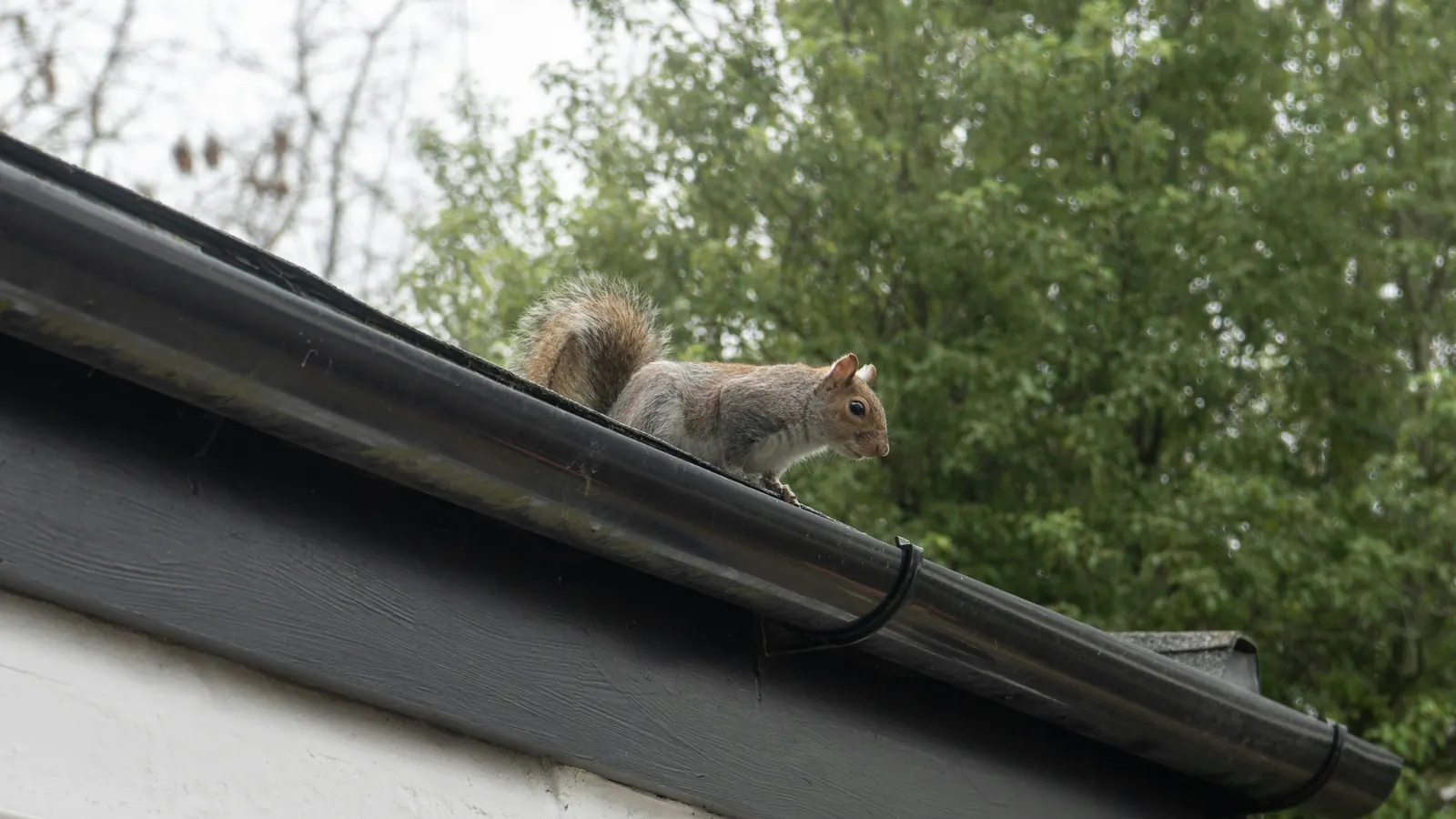
Squirrels climb onto the roof from nearby trees and chew their way in through vents and the roof edge. They can have young in the nest from February through August.
Raccoons are after attics and chimneys. An uncapped chimney is a common place for them to raise their young, and in extreme cases they tear off shingles or fascia boards to get in.
Birds build nests in vents and gutters, and a nest can block the vent it’s in.
Bats can’t make their own entry holes. They squeeze through small gaps, and large piles of their droppings can carry the fungus that causes histoplasmosis, a lung infection. The CDC advises leaving big cleanups to professionals.
Why nothing gets sealed until the animals are out
Attics and chimneys are where these animals raise their young. The Game Commission’s advice for squirrels, raccoons and other den animals is to let the young leave first, often by waiting until fall, and then block the way in.
Bats need the most care. Shut them out in summer and the ones trapped inside head for your living space looking for a way out. The Game Commission’s bat guidance says not to seal bats out during the May 15 to August 1 maternity season or in the winter months, and to leave one-way exits up for at least five nights before the gap is closed.
Who removes the animal
In Pennsylvania, a person who removes nuisance wildlife for someone else generally needs a nuisance wildlife control operator permit from the Game Commission. So if animals are living in your attic or chimney, call a permitted wildlife control operator to get them out. We’re roofers. Our part comes once they’re gone.
How to protect your roof from animals
Stay off the roof and the ladder yourself. Most of this happens on the ground.
- Have branches trimmed back 6 to 8 feet from the house, so squirrels can’t jump onto the roof.
- Keep trash in cans with tight-fitting lids, and don’t leave pet food or water out overnight. Both draw raccoons.
- If your chimney has no cap, a securely fastened one keeps raccoons out of the flue.
What we repair after animal damage
Once the animals are out, we repair damaged shingles and leaks on the roof, and replace a roof that’s past repair. If you’re not sure how far the damage goes, a roof inspection gives you a written report of what we find. We work from Allentown across the Lehigh Valley.
When they’re gone, call (484) 553-0213 or request an estimate.