

After a season of heavy snow, ice, and wind, many homeowners across the region are asking the same question: Is now the right time for a roof replacement? In the wake of recent winter storms, winter roof replacement in Lehigh Valley conversations are picking up speed, especially among homeowners dealing with leaks, missing shingles, or visible roof stress.
At In The Light Roofing, we’ve seen firsthand how winter weather exposes weaknesses that stayed hidden all year. This guide explains when winter roof replacement in Lehigh Valley is the right move, what to expect after storms, and how experienced local roofers approach cold-weather replacements safely and effectively.
Post-Storm Repairs and Resolutions
Winter storms in the Lehigh Valley rarely arrive quietly. Heavy, wet snow followed by freezing rain puts extreme pressure on roofing systems. According to NOAA regional data, eastern Pennsylvania often experiences rapid freeze-thaw cycles after major snow events, which increases the risk of shingle damage and leaks.
For many homeowners, January and February become a season of decisions. Do you patch and wait, or move forward with winter roof replacement in Lehigh Valley planning to avoid repeat problems in spring? Understanding what winter storms leave behind helps answer that question.
How Winter Storms Damage Roofs in the Lehigh Valley
Winter damage doesn’t always show up as a dramatic collapse. More often, it’s subtle:
- Shingles loosened by wind gusts
- Ice dams forcing water under flashing
- Snow load stressing older roof decking
- Moisture trapped in attic insulation
Licensed roofer insights from our field crews confirm that many post-storm issues are cumulative. One storm alone may not cause failure, but repeated snow events often push aging roofs past their limit. That’s why winter roof replacement in Lehigh Valley assessments increase after prolonged storm cycles.
When Winter Roof Replacement Makes Sense
Not every roof needs full replacement after winter weather. However, winter roof replacement in Lehigh Valley becomes the smart option when:
- The roof is already near the end of its lifespan
- Multiple leaks appear across different sections
- Shingles are missing in large areas
- Roof decking shows signs of sagging or rot
- Temporary repairs no longer hold between storms
In these situations, waiting until spring can allow water damage to spread. Experienced contractors evaluate whether replacement now prevents larger structural costs later.
Cold-Weather Roofing: What’s Different in Winter
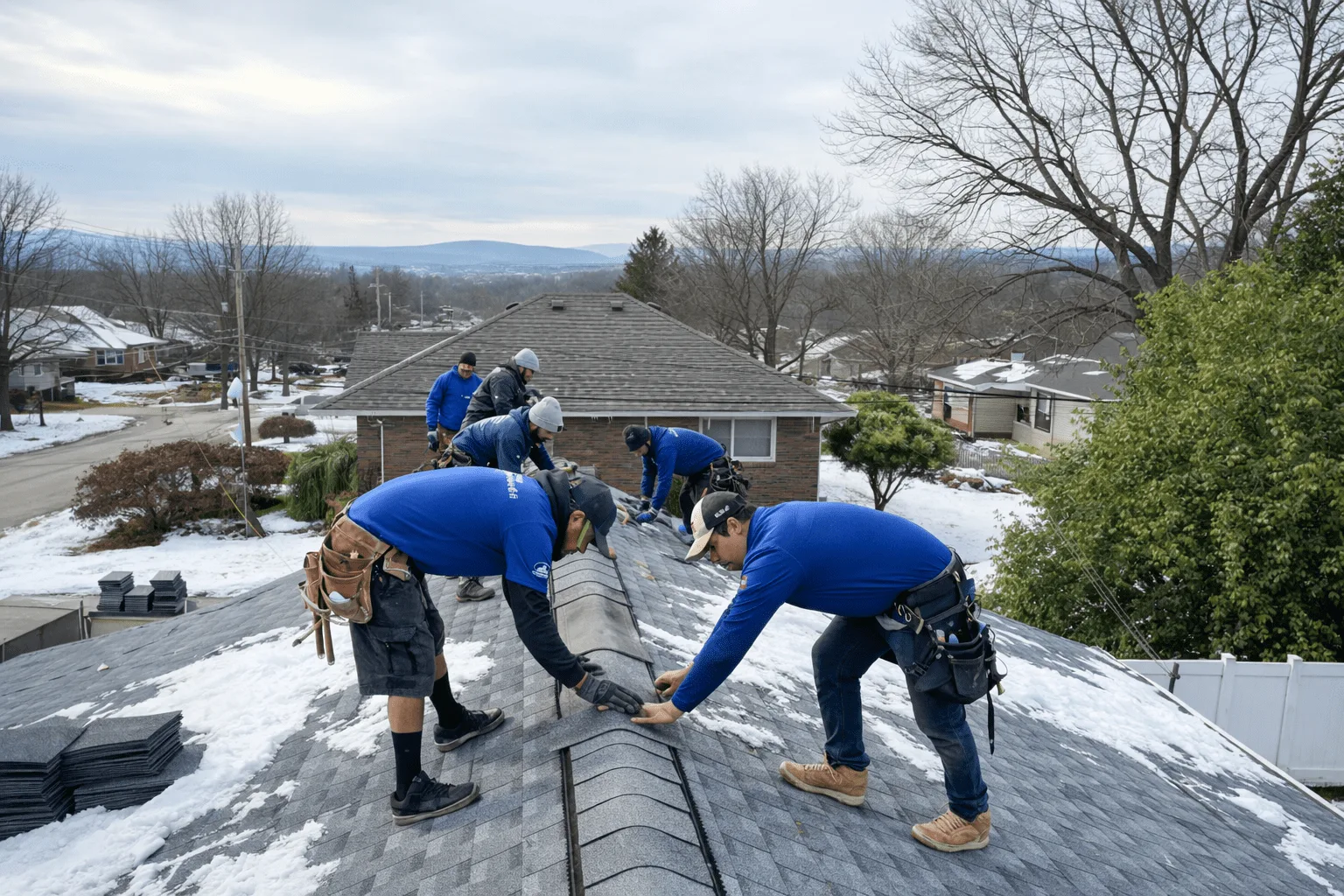
Many homeowners worry that winter replacements are unsafe or unreliable. While winter work does require added expertise, modern materials and techniques allow professional crews to complete winter roof replacement in Lehigh Valley projects safely.
Key adjustments include:
- Using cold-weather-rated underlayment
- Hand-sealing shingles where thermal activation is limited
- Scheduling installations during dry temperature windows
- Extra attention to attic ventilation and moisture control
At In The Light Roofing, winter installations follow strict manufacturer guidelines to ensure long-term performance, even in cold conditions.
Local Weather Patterns Matter
Lehigh Valley winters are unpredictable. One week may bring heavy snow, the next freezing rain.
Local knowledge matters. Roofers unfamiliar with Pennsylvania winters may underestimate how quickly snowmelt refreezes or how ice dams form along shaded rooflines. Our team plans winter roof replacement in Lehigh Valley projects around these realities, not generic weather assumptions.
A Local Homeowner Scenario
After a late-December storm, a homeowner in South Whitehall noticed water stains spreading across the ceiling. Initial patch repairs failed after the next snowfall. Our inspection revealed widespread shingle failure and saturated underlayment.
Rather than continuing temporary fixes, the homeowner chose winter roof replacement in Lehigh Valley services. The project stabilized the home immediately and prevented further interior damage. By spring, the roof was already performing through rain without issue.
Planning After the Storm: Inspection Comes First
Before committing to replacement, a professional inspection is critical. A post-storm evaluation helps determine whether repairs or full replacement are the better long-term choice.
During inspections, we assess:
- Shingle adhesion and loss
- Flashing separation
- Attic moisture levels
- Structural stress indicators
These findings guide realistic planning. As a safe note for homeowners, replacement estimates assist homeowners in planning claims, without making outcome guarantees.
Roof Replacement vs. Temporary Repairs
Temporary repairs can be useful, but they have limits. Tarps, sealants, and patching often buy time, not solutions. If your roof repeatedly leaks after storms, winter roof replacement in Lehigh Valley planning becomes more cost-effective than recurring repairs.
A full Roof Replacement addresses hidden damage beneath shingles, restores structural integrity, and resets the roof’s lifespan.
Materials That Perform Better After Winter Storms
Certain roofing materials are better suited for post-storm replacement:
- Architectural asphalt shingles with higher wind ratings
- Ice-and-water shield underlayment in valleys and eaves
- Enhanced ridge ventilation to reduce ice dam risk
Material choice is tailored to roof pitch, age, and local exposure. This customization is a key reason homeowners choose local experts for winter roof replacement in Lehigh Valley projects.
Safety and Professional Standards
Winter roofing is not a DIY project. Ice, snow, and steep pitches increase fall risk significantly. Professional crews use harness systems, controlled access points, and weather monitoring to work safely.
This commitment to safety protects both workers and homeowners, and ensures quality results even during cold-season installations
Why Homeowners Trust In The Light Roofing
Local experience matters after winter storms. In The Light Roofing has worked through countless Lehigh Valley winters, helping homeowners recover from storm damage with clarity and confidence.
Our approach emphasizes:
- Honest assessments
- Clear documentation
- Local weather expertise
- Manufacturer-approved installation methods
Homeowners appreciate knowing when replacement is truly necessary, and when it isn’t.
You can also visit us in Allentown, PA to discuss post-storm options in person.
Final Thoughts: A Smart Start After the Storms
Winter storms don’t just test roofs, they reveal their limits. For many homeowners, winter roof replacement in Lehigh Valley planning is about starting the year with confidence, not uncertainty.
With the right expertise, materials, and timing, winter replacement can protect your home long before spring arrives.
Start the year right, book your replacement consultation now.
Frequently Asked Questions
Is winter roof replacement in Lehigh Valley safe?
Yes, when performed by experienced professionals using cold-weather procedures and materials.
Will shingles seal properly in winter?
Shingles may require hand-sealing, but proper installation ensures long-term performance.
Should I wait until spring after storm damage?
If leaks or structural issues persist, waiting may allow damage to spread.
How do I know if replacement is necessary?
A professional inspection will determine whether repairs or replacement make more sense.
Can winter estimates help with planning?
Yes. Replacement estimates assist homeowners in planning claims and budgeting decisions.