

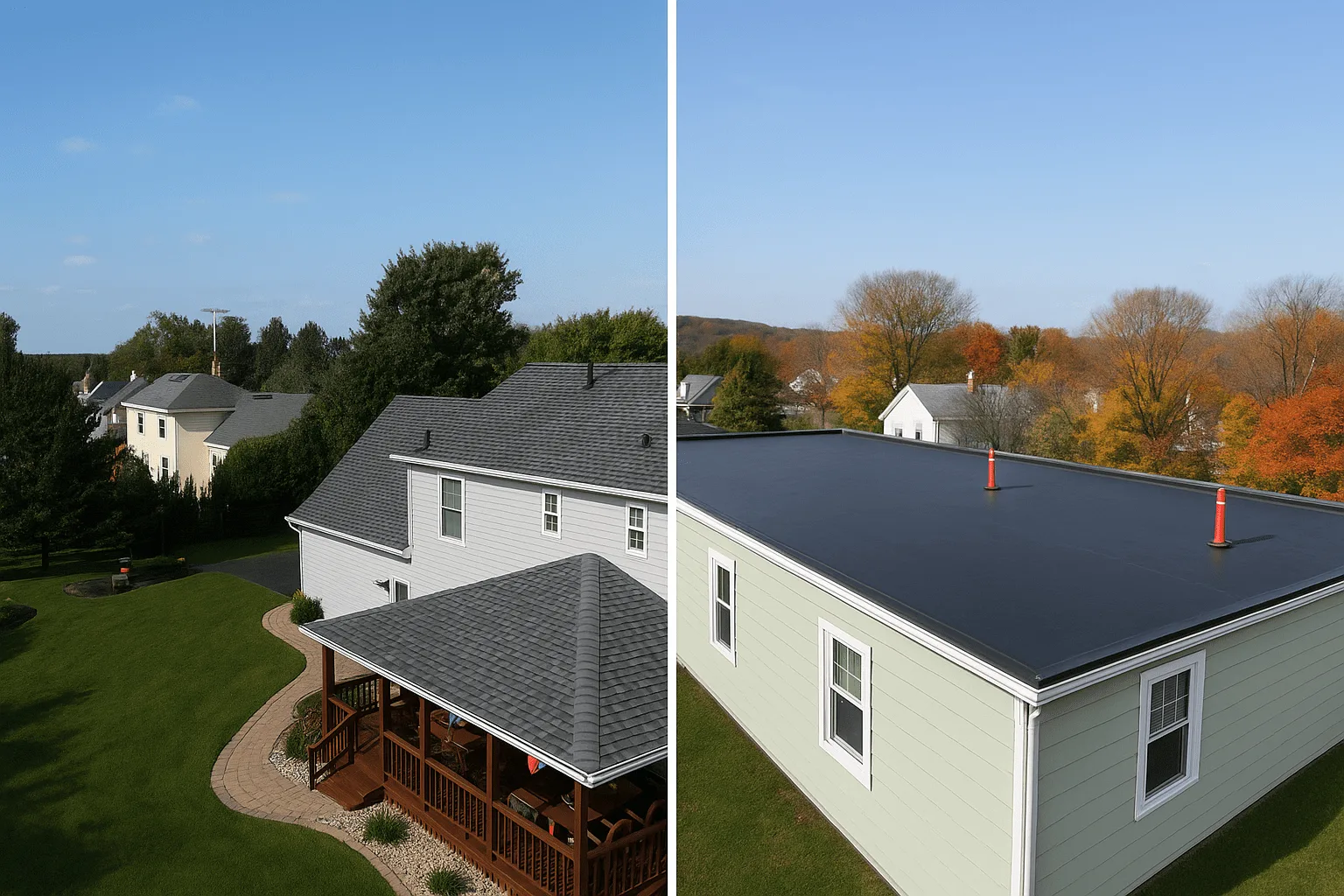
If you’re a homeowner preparing for a roof replacement this fall, you’re likely weighing the decision between asphalt shingles or EPDM rubber roofing. Both materials are widely used across the Lehigh Valley, but they serve very different purposes. Asphalt shingles remain the most popular choice for pitched residential roofs, while EPDM rubber is a proven solution for flat or low-slope structures.
At In The Light Roofing, our licensed roofers often help homeowners navigate this exact decision. With Bethlehem’s historic homes, Allentown’s row houses, and Whitehall’s modern developments, knowing whether to choose asphalt shingles or EPDM rubber roofing makes a huge difference in cost, durability, and year-round comfort.
Why Fall Is Prime Roof Replacement Season
Fall is the sweet spot for roof projects in the Lehigh Valley. The weather is cool, materials seal properly, and homeowners have time to prepare before snow and ice arrive. Delaying until winter means higher risks: adhesives may not set in freezing temperatures, shingles may not lay flat, and snow can hide developing leaks.
That’s why licensed contractors recommend deciding on asphalt shingles or EPDM rubber roofing during autumn. It’s your last chance to prepare before months of unpredictable storms.
Understanding the Basics of Each Material
Asphalt Shingles
Asphalt shingles are the classic roofing choice for pitched roofs. They’re available in three-tab, dimensional, and premium architectural varieties. Known for their affordability, versatility, and wide range of styles, they blend seamlessly with neighborhoods throughout the Lehigh Valley.
EPDM Rubber Roofing
EPDM, short for Ethylene Propylene Diene Monomer, is a synthetic rubber membrane used primarily for flat or low-slope roofs. It’s installed in large sheets, minimizing seams and reducing the chance of leaks. EPDM is known for its durability and ability to withstand standing water, which makes it ideal for urban row homes and commercial buildings.
Local Weather and Performance Differences
Choosing between asphalt shingles or EPDM rubber roofing in the Lehigh Valley requires understanding how local weather affects each option.
- Asphalt shingles handle heavy winds well when installed correctly, but they can crack in freeze-thaw cycles if already weakened.
- EPDM rubber roofing resists pooling water, which is common on flat roofs in Allentown after fall downpours.
Bethlehem’s roofing issues often come from back-to-back fall storms followed by quick freezes. Local roofers emphasize that material selection must account for these shifts.
Cost Considerations
- Asphalt Shingles: Most Bethlehem homeowners choose shingles for affordability. Average installations run between $5–$7 per square foot, depending on style.
- EPDM Rubber Roofing: EPDM tends to cost slightly more upfront, averaging $7–$12 per square foot, but its longevity often offsets the investment.
Delaying the choice until spring may cost more overall, since winter damage can make roofs harder to repair before replacement.
Real Homeowner Scenario: Allentown Townhouse
One homeowner in Allentown had a flat-roofed townhouse and assumed shingles were the only option. After years of patching leaks, they finally consulted us. We recommended EPDM, and within weeks their recurring issues stopped. The customer later said the decision between asphalt shingles or EPDM rubber roofing was one they wished they had made earlier.
Lifespan and Maintenance
- Asphalt Shingles: Typically last 20–30 years, depending on material and upkeep. They may require periodic repairs after high winds or hail.
- EPDM Rubber Roofing: Can last 30–40 years with minimal maintenance, especially when installed in large sheets that limit seams.
Both materials benefit from seasonal inspections. Our crews often find small issues, like a lifted shingle or a seam in EPDM pulling loose, that are quick to fix if caught early.
Energy Efficiency and Comfort
Asphalt shingles now come in reflective colors that reduce heat absorption, making them more efficient than older varieties. EPDM rubber is often black, which absorbs heat, though white reflective coatings are available.
For Bethlehem homeowners deciding on asphalt shingles or EPDM rubber roofing, consider your energy goals. Shingles are ideal for pitched homes needing aesthetic options, while EPDM can reduce cooling costs in flat-roofed buildings when paired with coatings.
Insurance Considerations
Insurance companies rarely “prefer” one roofing type over another. However, they expect homeowners to act quickly after damage. Delays complicate claims, regardless of whether you have asphalt shingles or EPDM rubber roofing. That’s why timely replacement or repair is essential for maintaining coverage.
Installation Differences
- Asphalt Shingles: Installed piece by piece, nailed to the decking, with underlayment and flashing.
- EPDM Rubber Roofing: Rolled out in sheets, adhered with special adhesives or mechanically fastened.
Local contractors note that EPDM installation requires experience, especially in Allentown’s older homes where flat roofs meet brick walls.
Aesthetics and Neighborhood Fit
Bethlehem’s historic districts often favor shingles for their traditional look, blending with slate or cedar-style homes. EPDM, on the other hand, fits urban and commercial settings where function outweighs appearance. When considering asphalt shingles or EPDM rubber roofing, remember that curb appeal matters, especially if you plan to sell in the future.
Environmental Impact
- Asphalt Shingles: Heavier on landfills, though recycling programs are improving.
- EPDM Rubber Roofing: Lightweight, recyclable, and often manufactured with sustainable practices.
If eco-friendliness is a priority, EPDM may edge out shingles, though new asphalt options continue to evolve.
Expert Tips from Licensed Roofers
Based on years of work across the Lehigh Valley, our team recommends:
- Inspect your roof every fall, whether you have asphalt shingles or EPDM rubber roofing.
- Don’t assume shingles will work on flat roofs, EPDM is built for them.
- If your roof is pitched and visible, shingles often make financial and aesthetic sense.
- If your roof pools water after storms, EPDM is the safer choice.
Internal Links
For deeper detail, see our dedicated service pages:
Local Connection
In The Light Roofing has installed both materials across the Lehigh Valley. From replacing asphalt shingles on family homes in Bethlehem to installing EPDM on Allentown’s flat-roofed duplexes, we’ve helped countless families choose wisely. If you’d like to stop by, Visit us in Allentown, PA.
Your roof is too important to gamble on the wrong material. Whether you’re considering asphalt shingles or EPDM rubber roofing, the right choice depends on your home’s structure, your budget, and Bethlehem’s unique weather.
Get expert guidance on the right roof before winter.
Frequently Asked Questions
How do I know whether I need asphalt shingles or EPDM rubber roofing?
If your roof is pitched, shingles are typically the right choice. For flat or low-slope roofs, EPDM is designed to handle water pooling.
Which lasts longer?
EPDM can last up to 40 years, while asphalt shingles average 20–30 years.
Can EPDM be used on sloped roofs?
No, EPDM is not ideal for steep slopes. It’s best for flat or nearly flat surfaces.
Do storms affect one material more than the other?
Shingles may blow off in high winds, while EPDM resists uplift but can be punctured by falling branches. Whether it is asphalt shingles or EPDM rubber roofing some storms can cause damage to both depending on the severity.
How much do they cost?
Asphalt shingles average $5–$7 per sq. ft., while EPDM runs $7–$12 per sq. ft.