

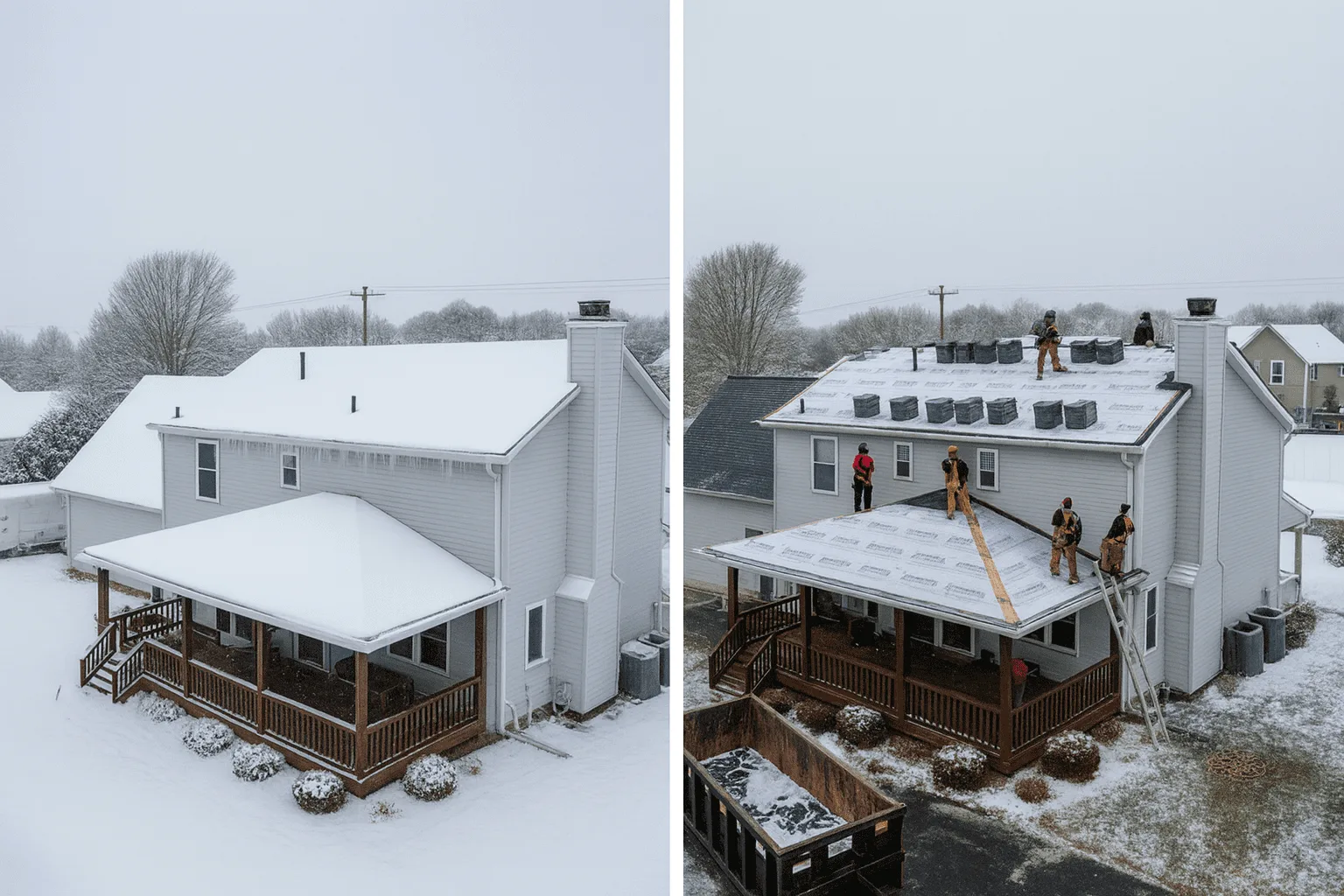
Each year, as temperatures dip and snow clouds gather over Lehigh County, homeowners start to panic about unfinished roof work. By late November, it’s a race against time, contractors are booked solid, shingles are slick with frost, and every call sounds the same: “Can you still do a winter roof replacement in Allentown before the next storm?”
At In The Light Roofing, we’ve handled these frantic requests for years. But here’s the truth: while winter roof replacement in Allentown can be done, it’s often risky, both for the roof and your wallet. Understanding these hidden dangers could save you from future headaches and costly repairs.
The Pre-Winter Cutoff Urgency
There’s a reason experienced roofers urge customers to schedule replacements before mid-November. The “pre-winter cutoff” exists because materials and adhesives behave differently in cold weather.
In Allentown, daytime highs often hover around 40°F by December. Once temperatures fall below 45°F, asphalt shingle sealants struggle to bond correctly. That means every winter roof replacement in Allentown carries the risk of shingles lifting under strong winter winds.
Local installer Mike R., a GAF-certified roofer with two decades of experience, explains:
“We’ve seen roofs installed too late in the season lose sections after a single ice storm. Adhesives never fully cure.”
That’s why proactive planning, getting your Roof Replacement booked in fall, can prevent thousands in avoidable damage.
Why Winter Roofing Is So Challenging in the Lehigh Valley
Allentown’s winters are unpredictable. One week brings flurries, the next a Nor’easter with sleet and 40-mph gusts. These conditions complicate even basic installation tasks.
- Material brittleness: Shingles stiffen and crack when nailed below freezing.
- Ice accumulation: Crews must clear snow and ice repeatedly, adding hours and risk.
- Safety concerns: Frosted surfaces increase the chance of slips and falls.
When crews attempt winter roof replacement in Allentown, safety protocols extend project timelines. Delays mean higher labor costs and greater exposure to sudden storms that roll off the Pocono Mountains.
The Science Behind Cold-Weather Adhesion
Most modern asphalt shingles rely on a thermally activated seal strip. In warm conditions, sun exposure softens the adhesive, bonding each shingle to the next. In winter, those strips remain rigid unless artificially warmed.
Some contractors attempt to use heat guns or temporary sealants, but these “quick fixes” rarely replicate the long-term performance achieved during proper spring or fall installations. That’s why seasoned pros recommend scheduling winter roof replacement in Allentown only when absolutely necessary, such as in emergency leak situations.
Moisture, Condensation, and Trapped Ice
The Lehigh Valley’s freeze-thaw pattern poses another hidden risk: trapped moisture. During a rushed winter roof replacement in Allentown, underlying wood sheathing may retain dampness that can’t dry properly. Once sealed beneath shingles, that moisture turns to mold or rot as temperatures fluctuate.
NOAA reports that Allentown averages over 30 inches of snowfall annually, plus several freeze-thaw cycles each week in January. These conditions make ventilation and underlayment selection critical. Skipping those steps for the sake of speed can jeopardize an entire roof system within a year.
Local Example: The Jefferson Street Mishap
Last winter, a homeowner on Jefferson Street hired an out-of-town crew promising “next-day installation.” They completed a winter roof replacement in Allentown during a cold snap, temperatures barely reached 32°F. By March, shingles began curling, and leaks appeared near the chimney.
When In The Light Roofing inspected the site, we found unsealed adhesive lines and moisture trapped under the ridge cap. The repair required partial re-roofing and attic drying, costing double the original estimate. This scenario happens more often than most realize, especially when homeowners rush to beat incoming snow.
Timing Is Everything: When Winter Replacements Make Sense
While late-season work carries risk, there are limited cases where winter roof replacement in Allentown is both possible and necessary. Emergency replacements, after storm damage or active leaks, must sometimes proceed regardless of weather.
Our crews handle such projects using specialized cold-weather materials, extra sealant layers, and temporary thermal blankets to ensure adhesion. Still, we always explain that results depend on cooperation from Mother Nature.
Roofing Materials That Perform Better in Winter
Some roofing products adapt better to Allentown’s cold conditions:
- Metal Roofing: Expands less in cold, offering strong resistance to snow buildup.
- Synthetic Shingles: Flexible polymers allow nailing in lower temperatures.
- EPDM Rubber Roofing: Ideal for flat or low-slope commercial buildings where adhesives can cure indoors first.
However, even with these materials, winter roof replacement in Allentown requires clear days, stable footing, and experienced installers familiar with cold-weather application.
How Weather Forecasts Guide Roofing Decisions
We track NOAA’s 10-day forecasts before committing to winter projects. In Allentown, sudden lake-effect squalls can appear overnight. Planning around those patterns minimizes risk and ensures each winter roof replacement in Allentown proceeds under safe, dry conditions.
Homeowners should expect flexible scheduling in December through February, shifting a day or two may be necessary to protect both crews and materials.
Structural Integrity Concerns
Cold weather amplifies brittleness not only in shingles but also in underlying structures. Wooden decking may contract, causing nail pops and misalignments. Performing a winter roof replacement in Allentown without inspecting decking first is like painting over a wet wall, it hides the issue temporarily, but damage resurfaces.
That’s why every job at In The Light Roofing begins with a full deck moisture scan and thermal imaging to detect hidden dampness before the first shingle goes on.
Energy Efficiency Implications
A poorly executed winter roof replacement in Allentown can also raise energy bills. Gaps in flashing or underlayment leak warm air from the attic, forcing furnaces to work harder, just when heating costs spike. Proper sealing and insulation help maintain consistent indoor temperatures even as outdoor readings plunge below freezing.
When Waiting Until Spring Saves Money
If your roof isn’t actively leaking, postponing replacement until March or April often yields better results. Warmer weather ensures stronger bonding, fewer labor delays, and smoother warranty compliance.
We advise homeowners to schedule pre-spring consultations in January, this locks in pricing and secures placement at the top of our queue once temperatures stabilize.
What Homeowners Can Do Before Winter Hits
If you’re worried your roof won’t last until spring:
- Schedule an inspection. Professionals can identify weak spots and recommend stop-gap repairs.
- Clear gutters and debris. Prevent ice dams that worsen existing leaks.
- Install temporary patches. Short-term membranes protect against further damage until full replacement.
- Document issues. Accurate photos and inspection notes support future maintenance planning (neutral insurance compliance).
Taking these steps helps delay the need for a full winter roof replacement in Allentown until weather conditions improve.
Local Expertise: Why In The Light Roofing Is Different
Our team lives and works right here in the Lehigh Valley. We know how fast a mild day can turn into an ice storm and how to plan around that volatility. Being GAF-certified and trained in cold-weather installation techniques allows us to handle urgent projects safely without cutting corners.
Homeowners trust us because we prioritize transparency, we’ll tell you honestly if waiting is better than rushing. You can also Visit us in Allentown, PA to discuss options in person before the next storm cycle hits.
Customer Story: Preventing a Disaster on South 12th Street
In early December 2023, an Allentown family noticed ceiling stains after heavy rain. They feared they’d need immediate winter roof replacement in Allentown. Our inspection revealed that only a small flashing section had failed. Instead of pushing for full replacement, we repaired the area, installed temporary ice shields, and scheduled full replacement for April.
Result: zero leaks all winter, and their eventual installation benefited from perfect warm-weather adhesion. Sometimes honest advice saves more than money, it preserves your peace of mind.
Common Misconceptions About Winter Roofing
- “Cold weather doesn’t matter.”
It does. Adhesion and flexibility are temperature-dependent. - “Snow helps seal shingles.”
False. Melting snow creates moisture traps, not bonds. - “Any contractor can handle winter work.”
Only trained crews with proper safety equipment should attempt winter roof replacement in Allentown.
Expert Insights: Balancing Urgency and Safety
We understand the urge to fix problems fast, no homeowner wants a leaking roof during January snow. But expertise means knowing when to pause. A rushed winter roof replacement in Allentown can introduce far bigger issues than it solves.
Our mission at In The Light Roofing is simple: protect your home intelligently, not impulsively. Whether that means emergency tarping today or full replacement tomorrow, we act with precision and integrity.
Final Takeaway: Plan Ahead, Stay Protected
Winter in Allentown doesn’t wait for perfect timing, but smart homeowners can. Schedule inspections early, secure your project before the freeze, and partner with professionals who understand local conditions from decades of experience.
When you choose In The Light Roofing, you’re not just buying materials, you’re gaining a partner who values craftsmanship, honesty, and safety.
Beat the snow, book your roof replacement today.
Frequently Asked Questions
Is winter roof replacement in Allentown safe?
It can be, but only under controlled conditions with experienced crews and dry weather. Cold adhesives and frost make the job more complex.
How cold is too cold to replace a roof?
Below 45°F, most sealants lose effectiveness. Special products may work down to 35°F but require extra caution.
Should I replace or patch my roof in winter?
If leaks are minor, temporary repairs often suffice until spring. Only major damage warrants immediate replacement.
Will waiting void my warranty?
No, manufacturers prefer installation under ideal conditions for warranty validity. Document inspections for future records.
Can metal roofs be installed in winter?
Yes. Metal panels don’t rely on thermal adhesion and perform well in cold temperatures, though safety precautions still apply.